
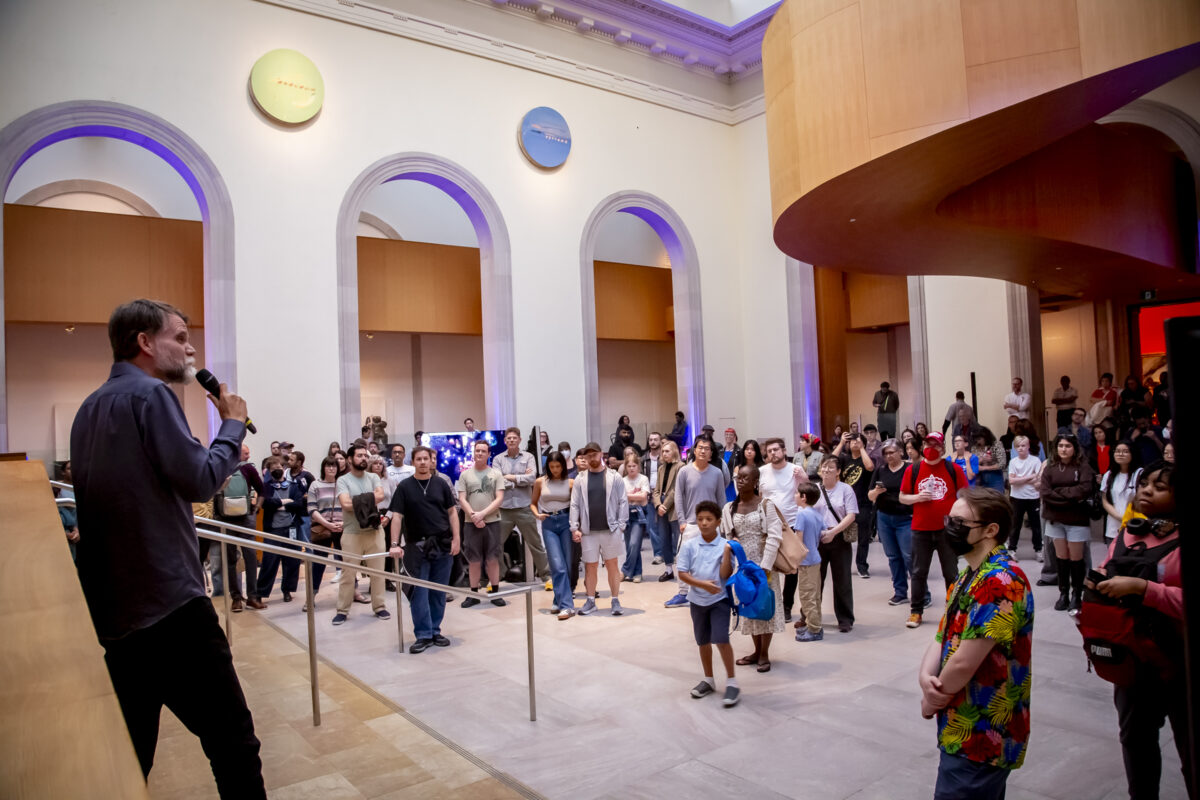
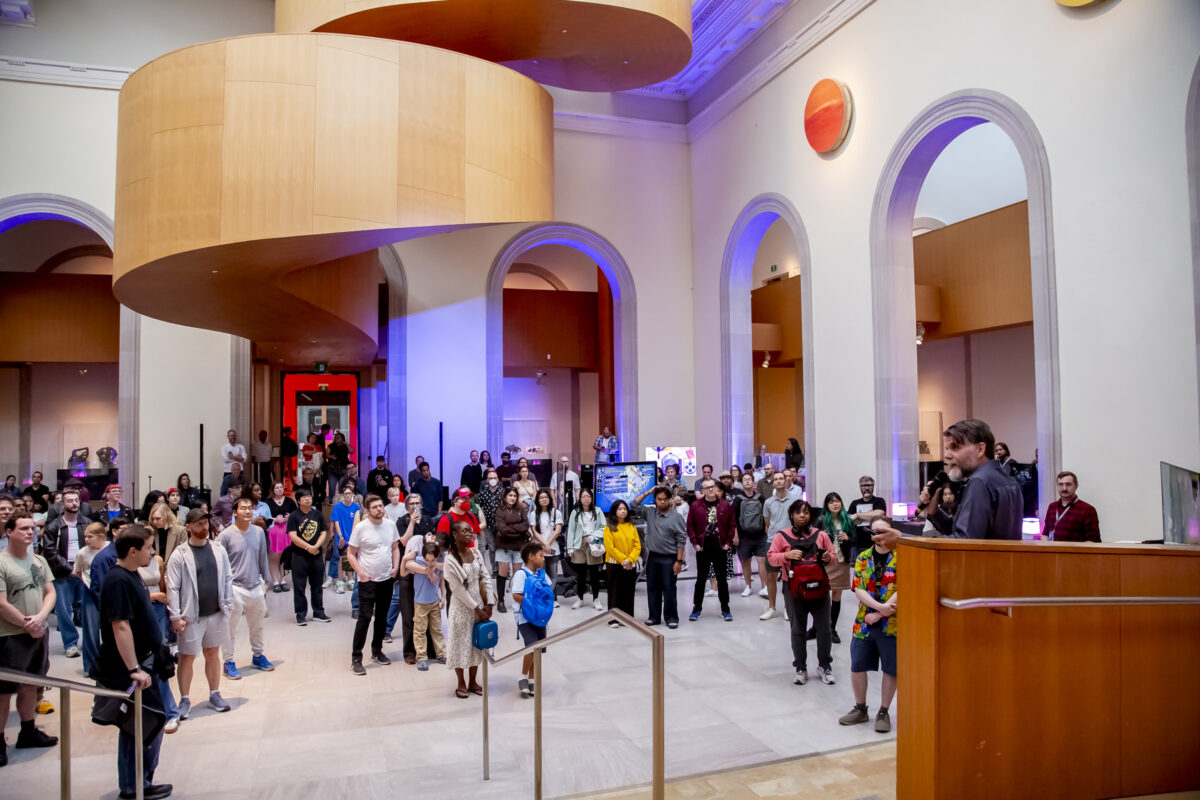
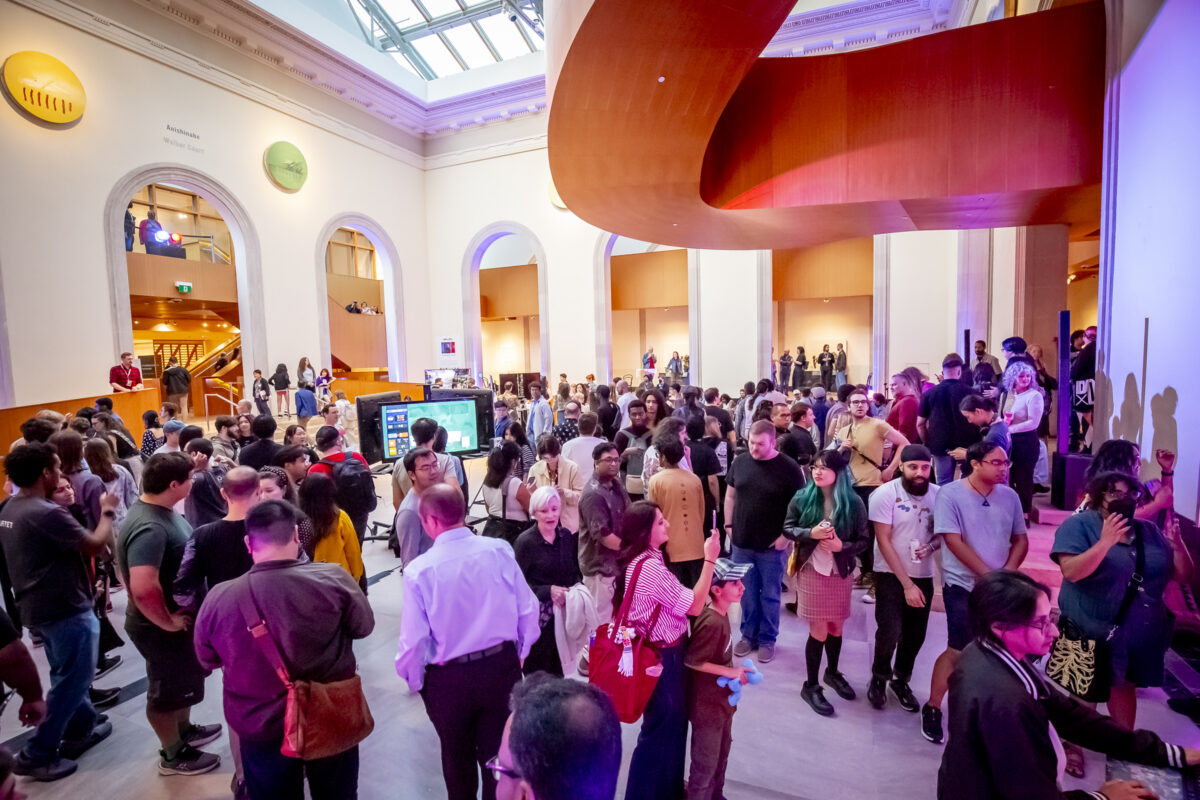
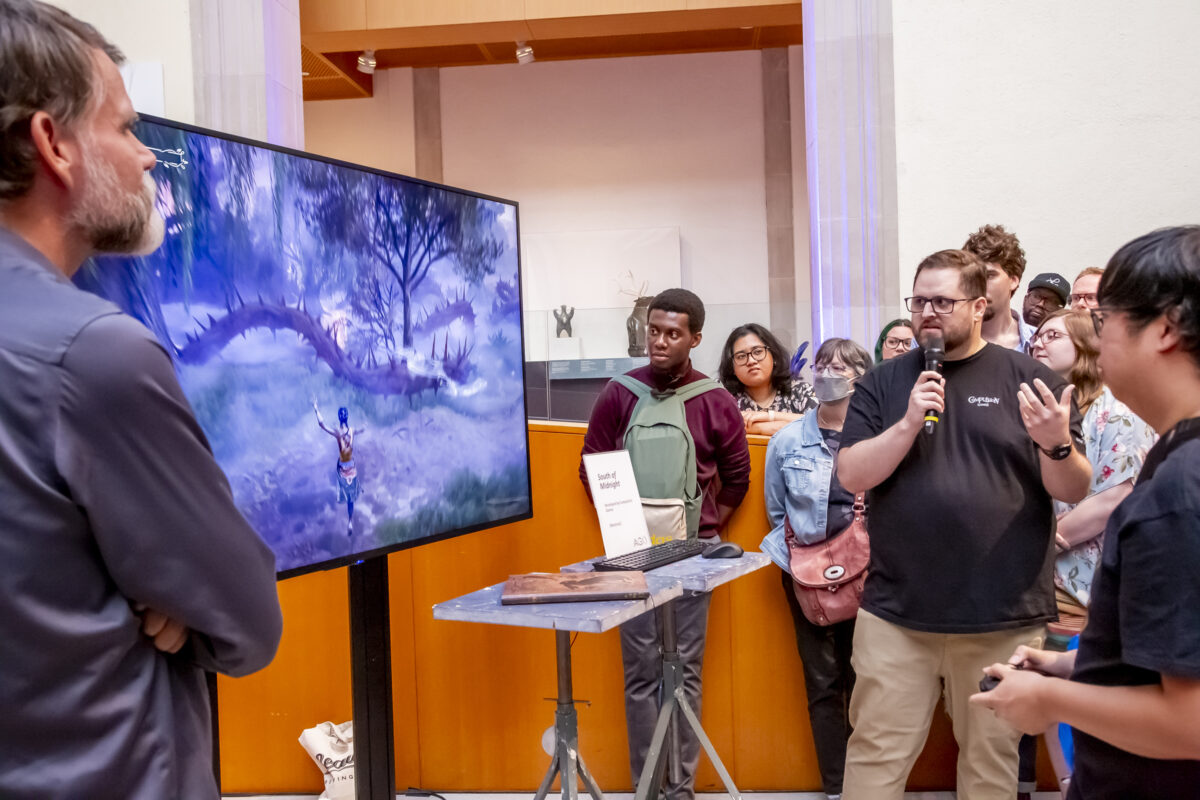
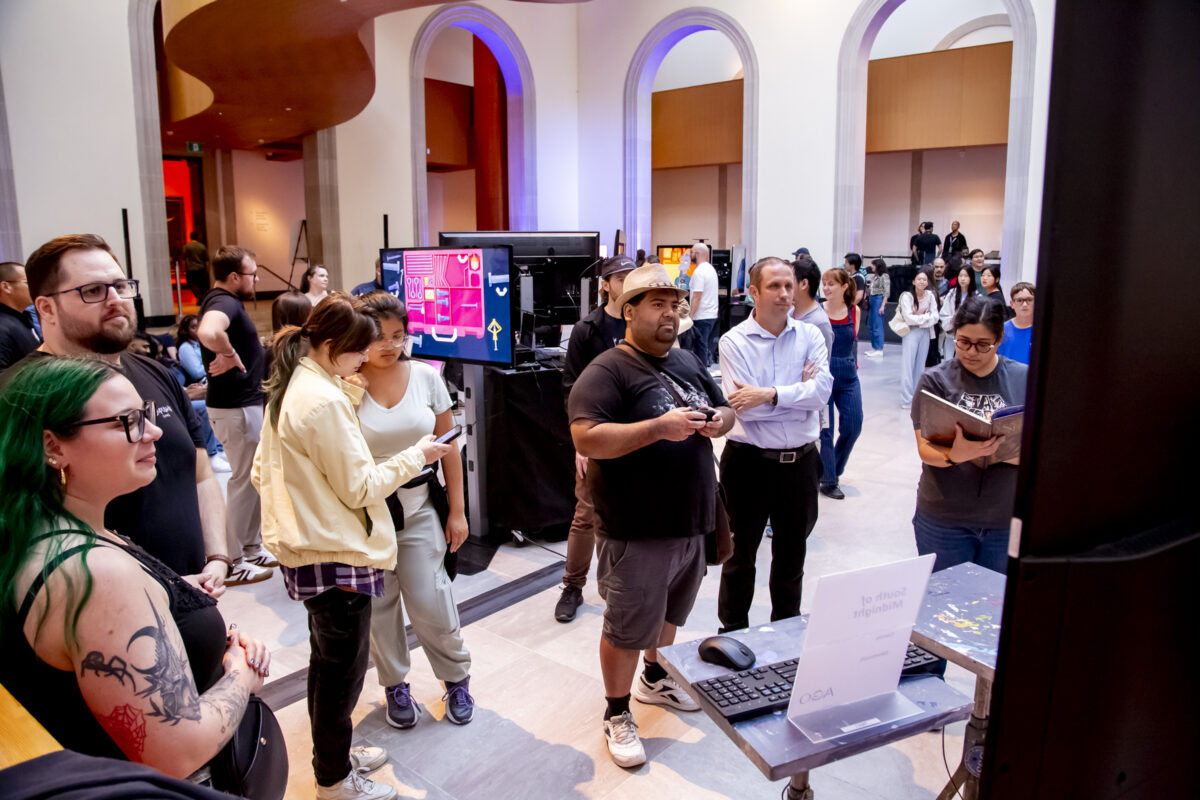
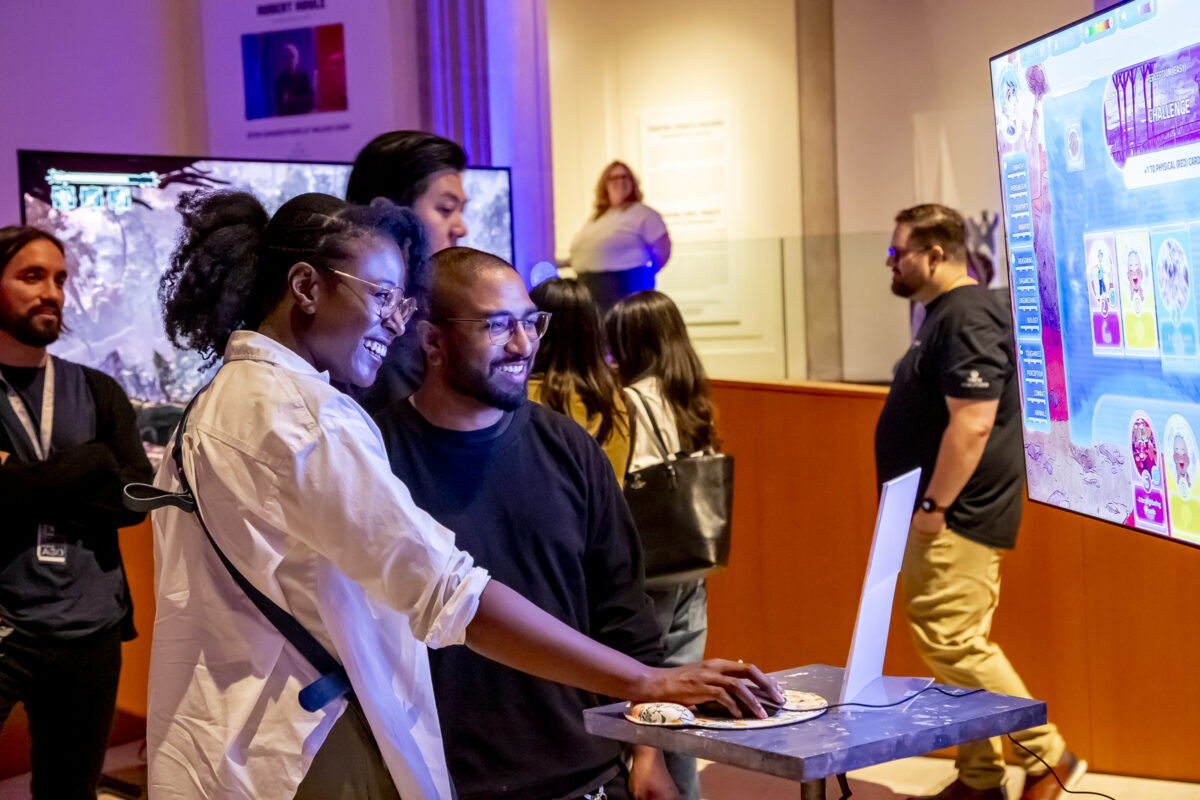
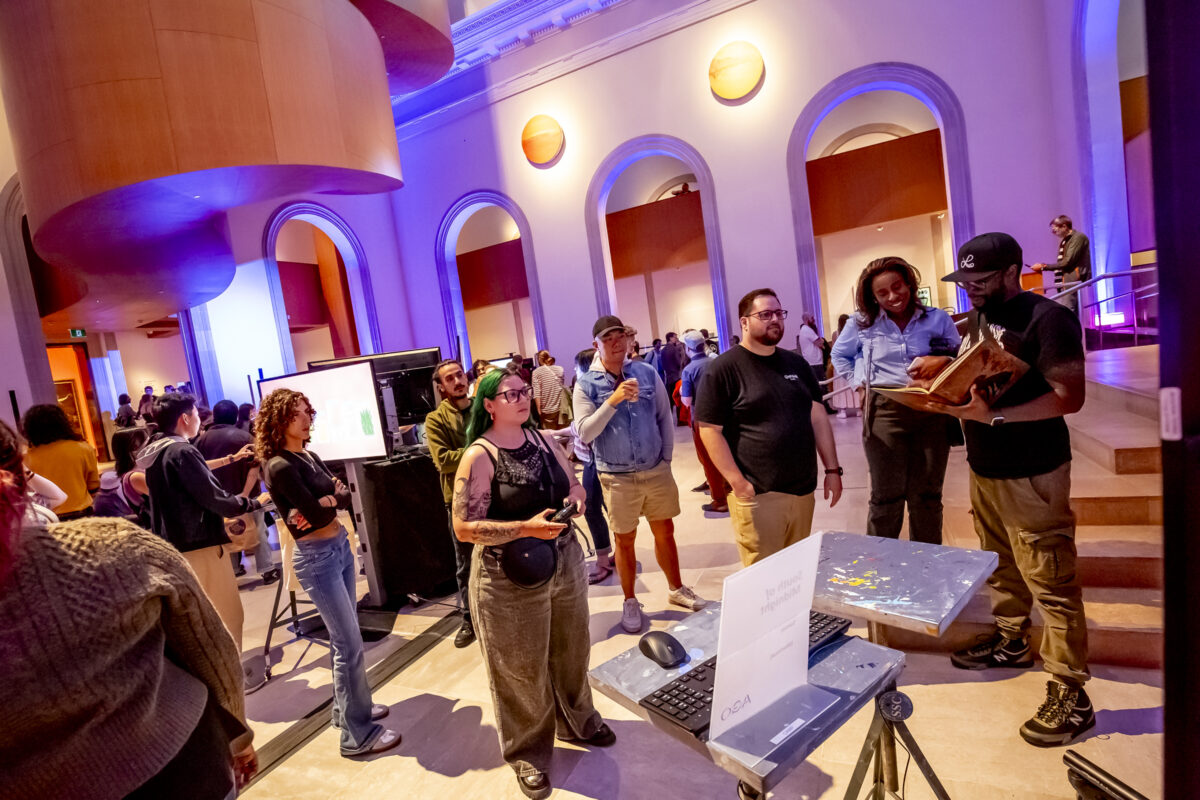
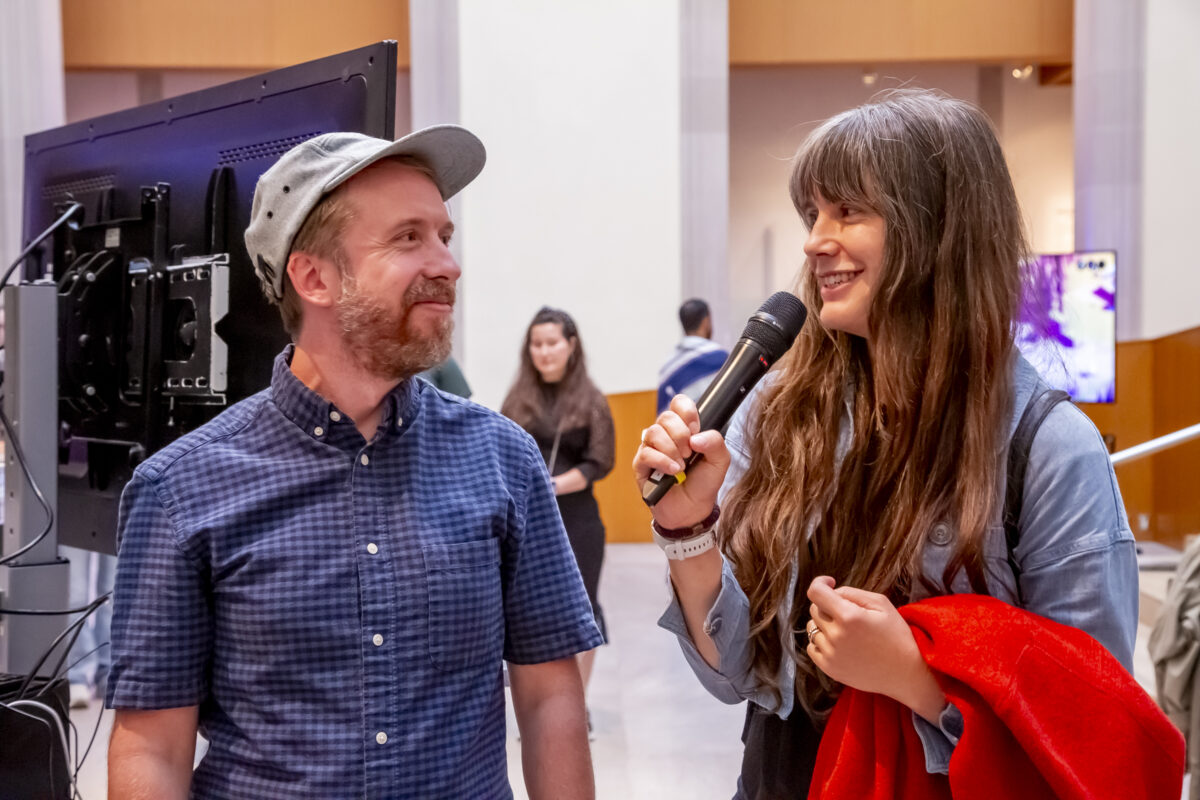
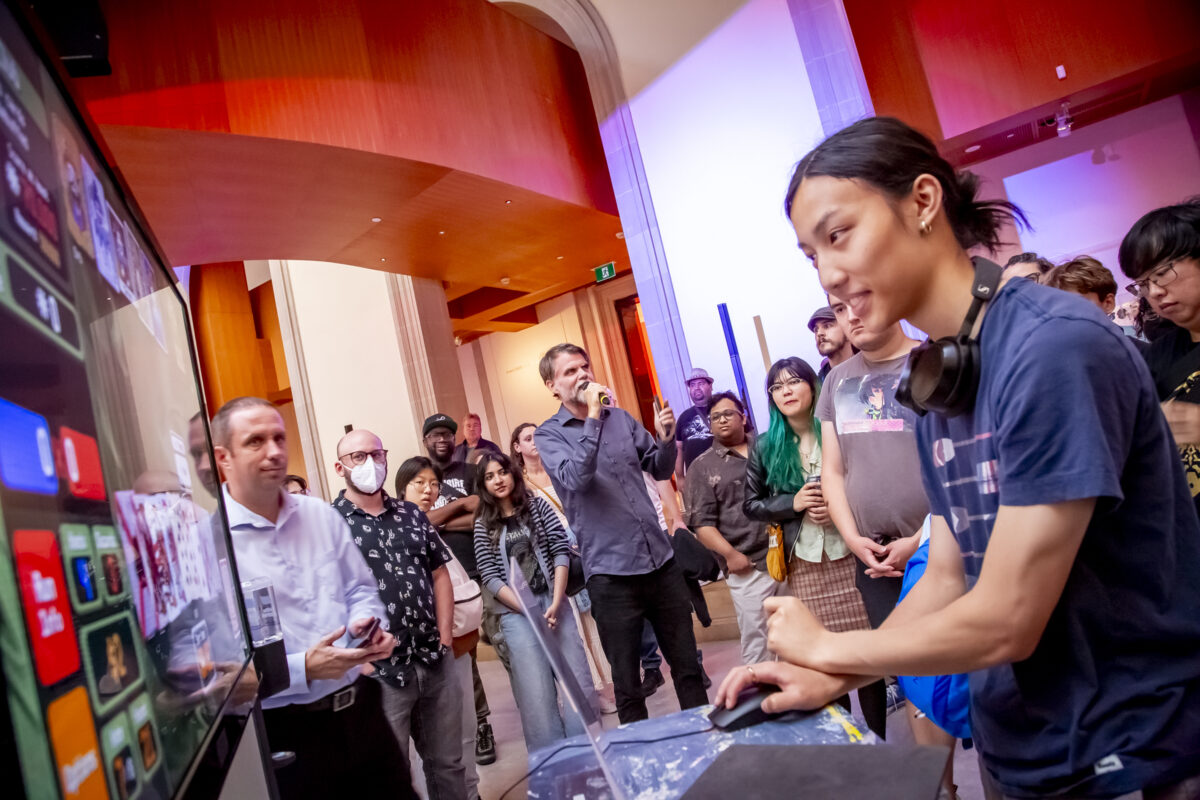
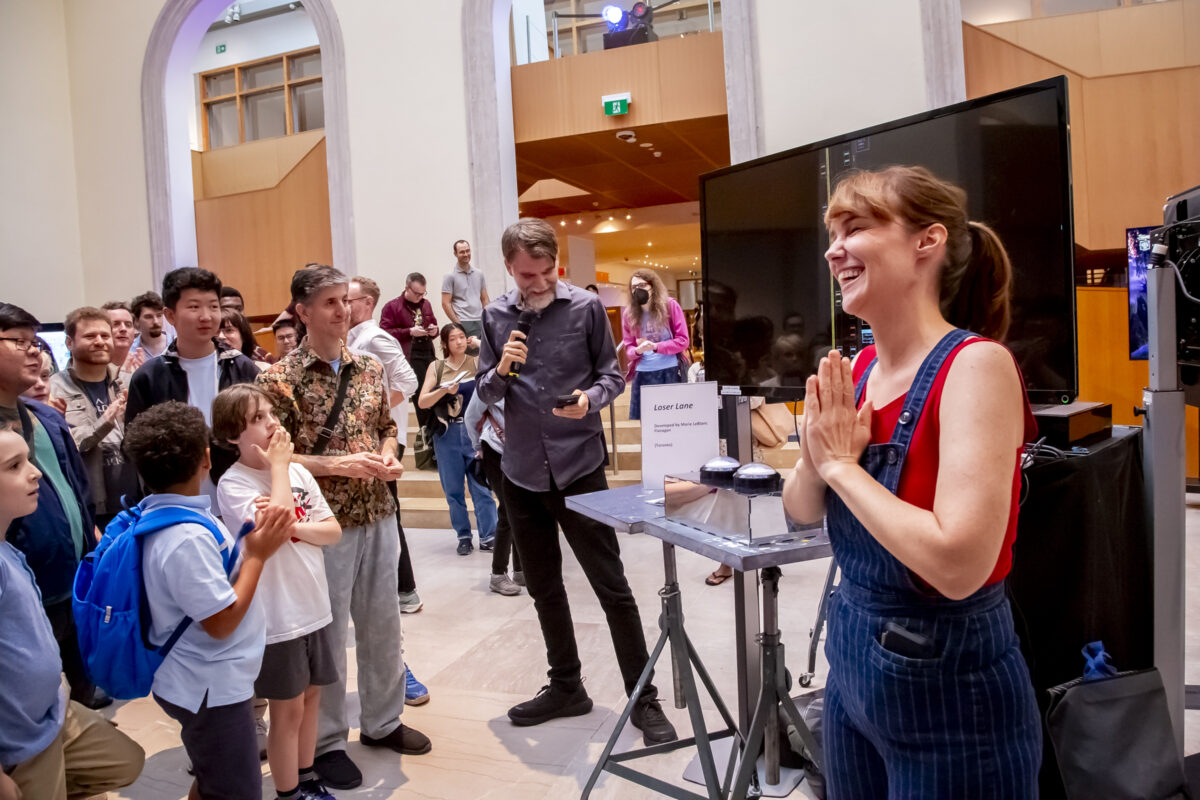
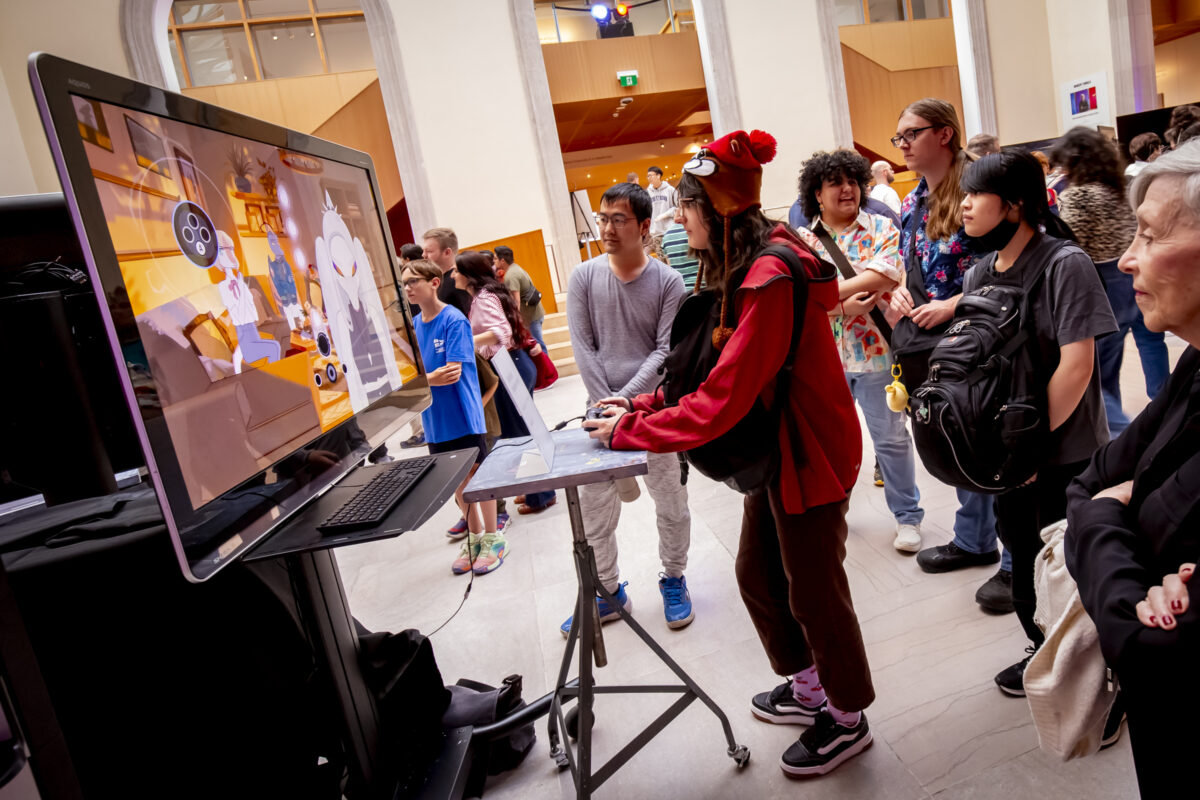
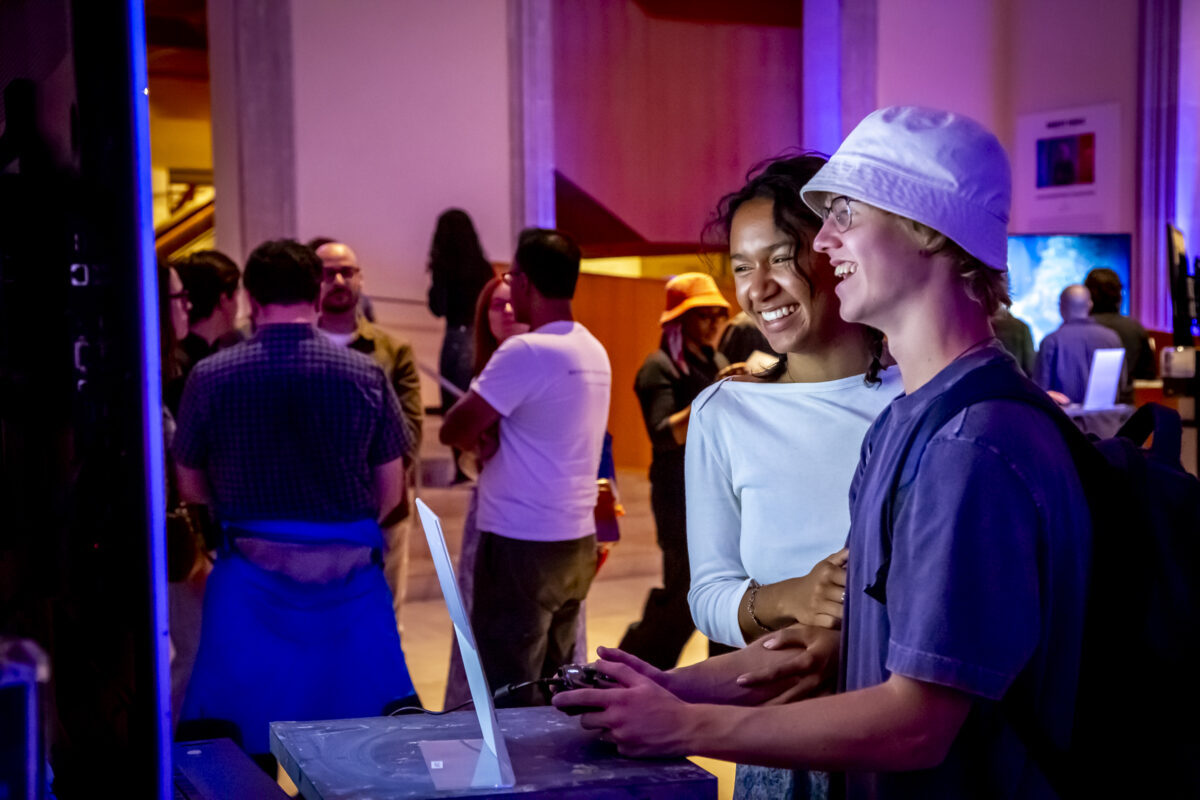
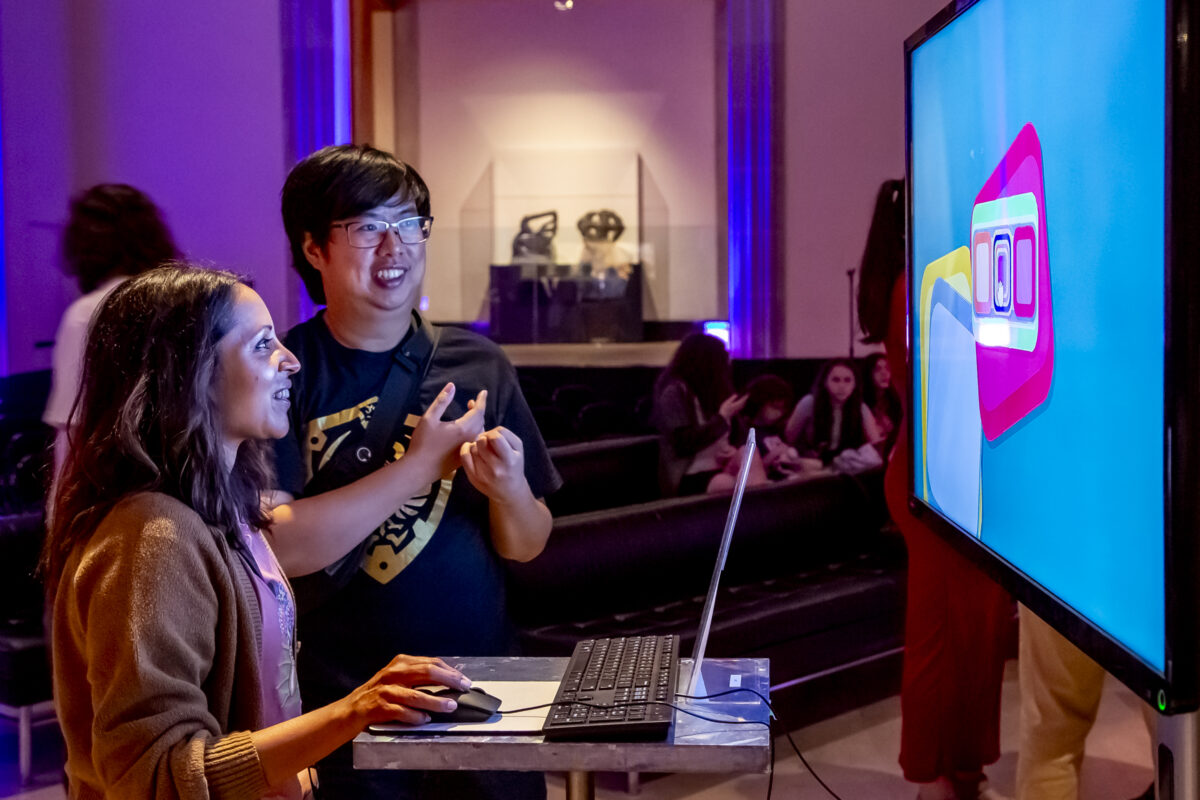
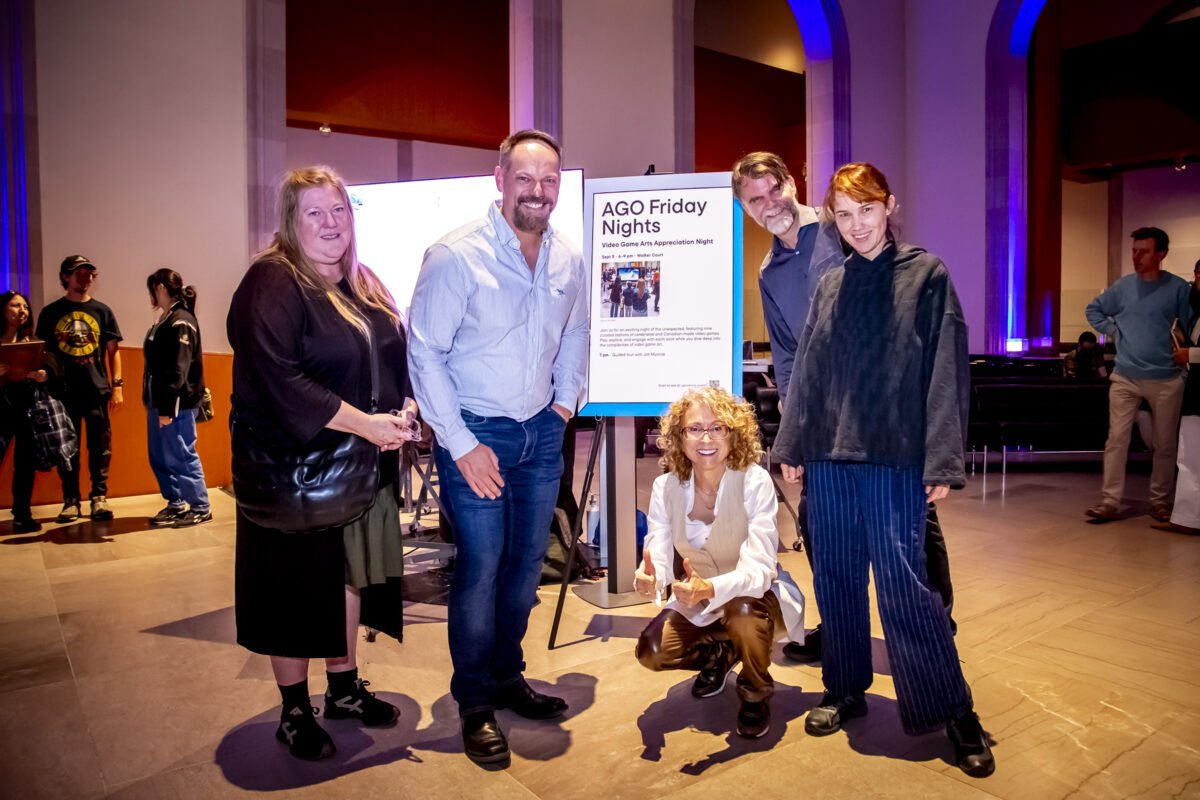
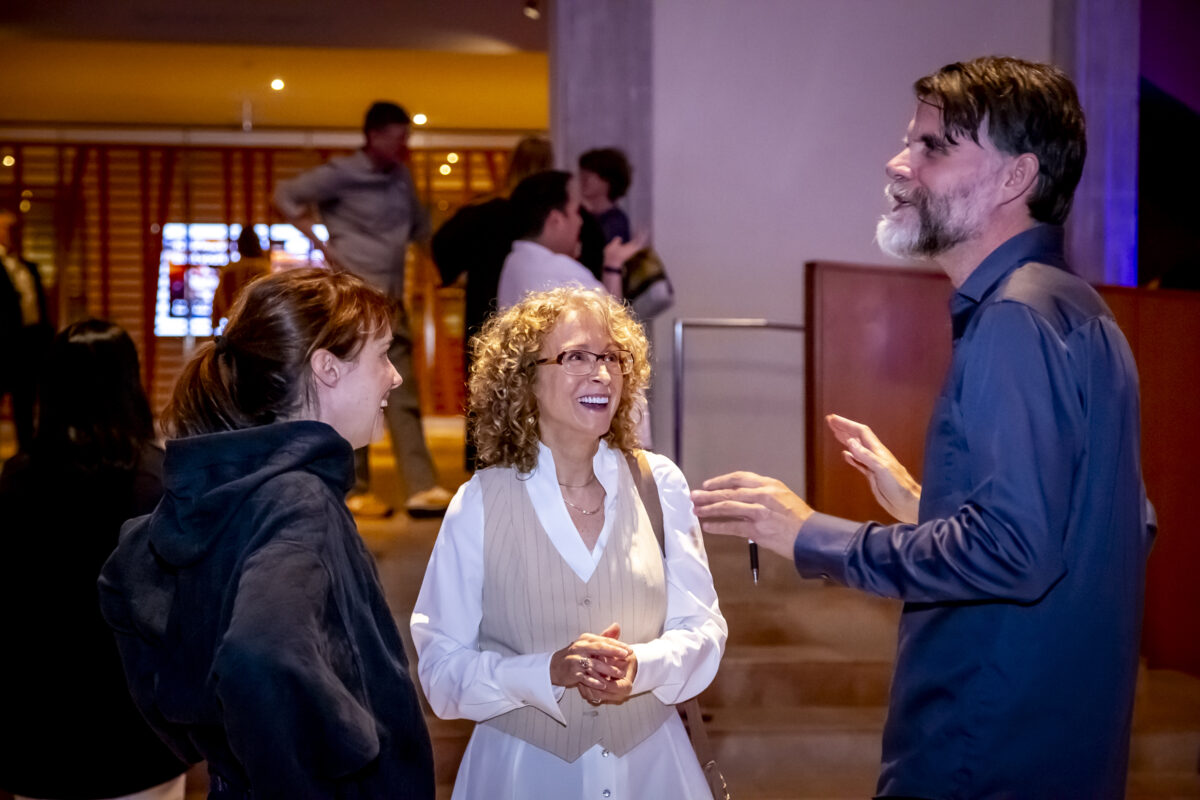
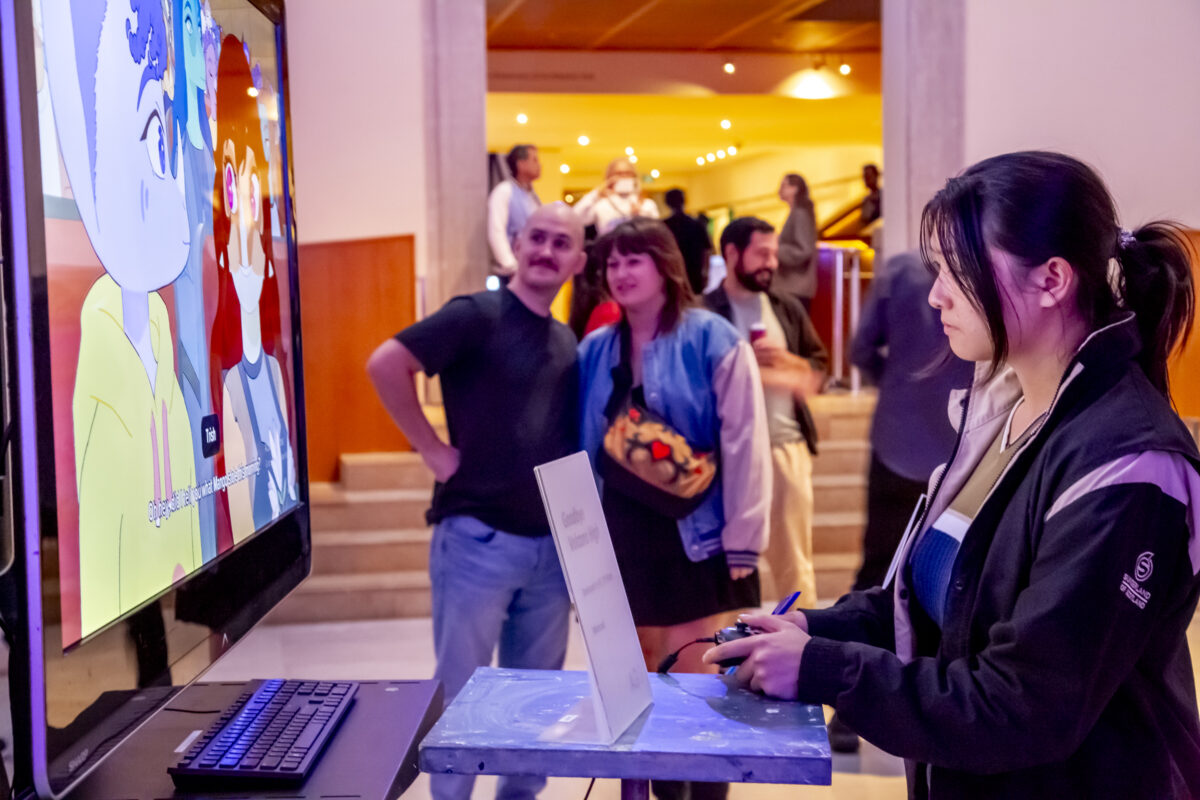
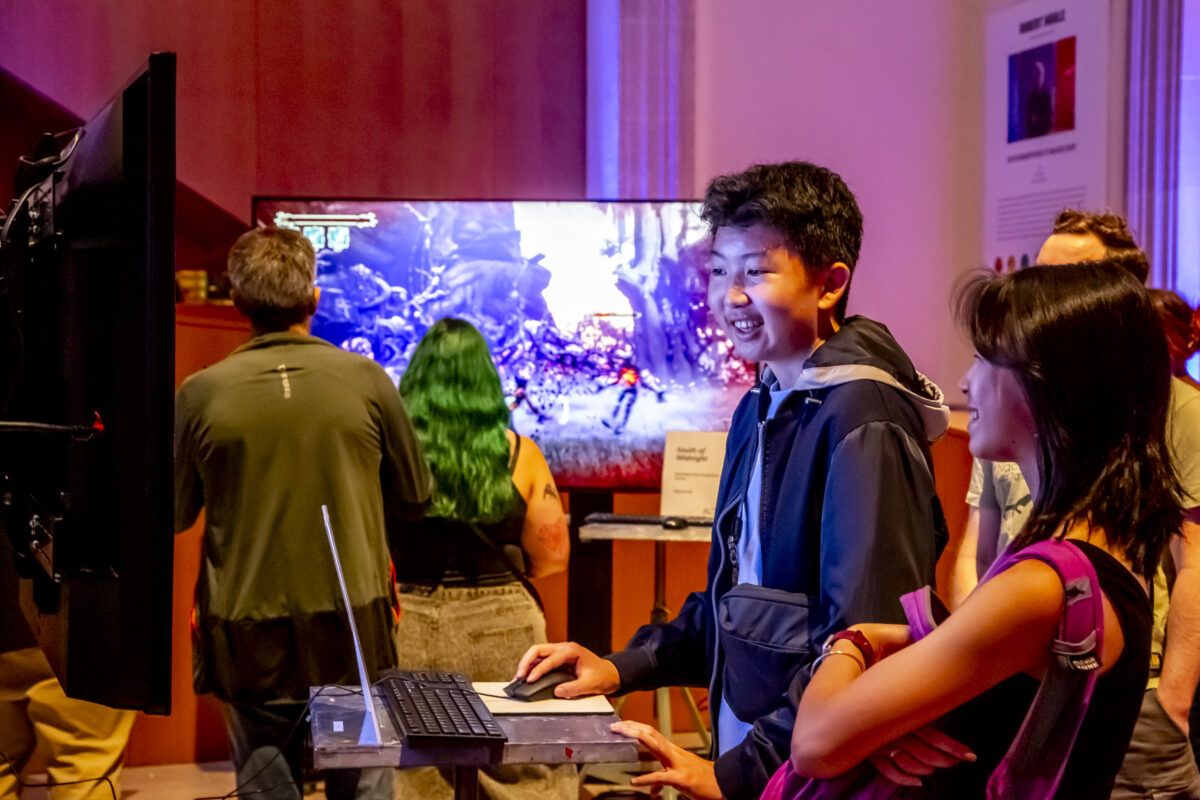
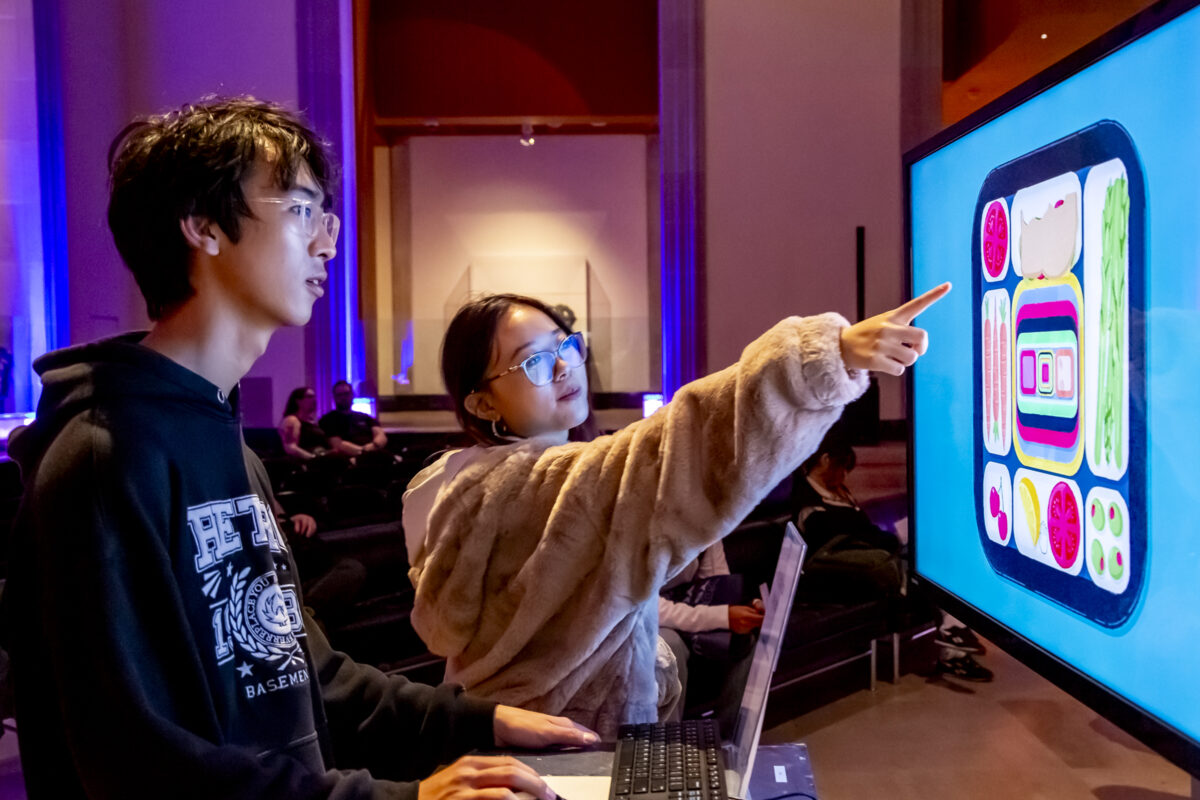
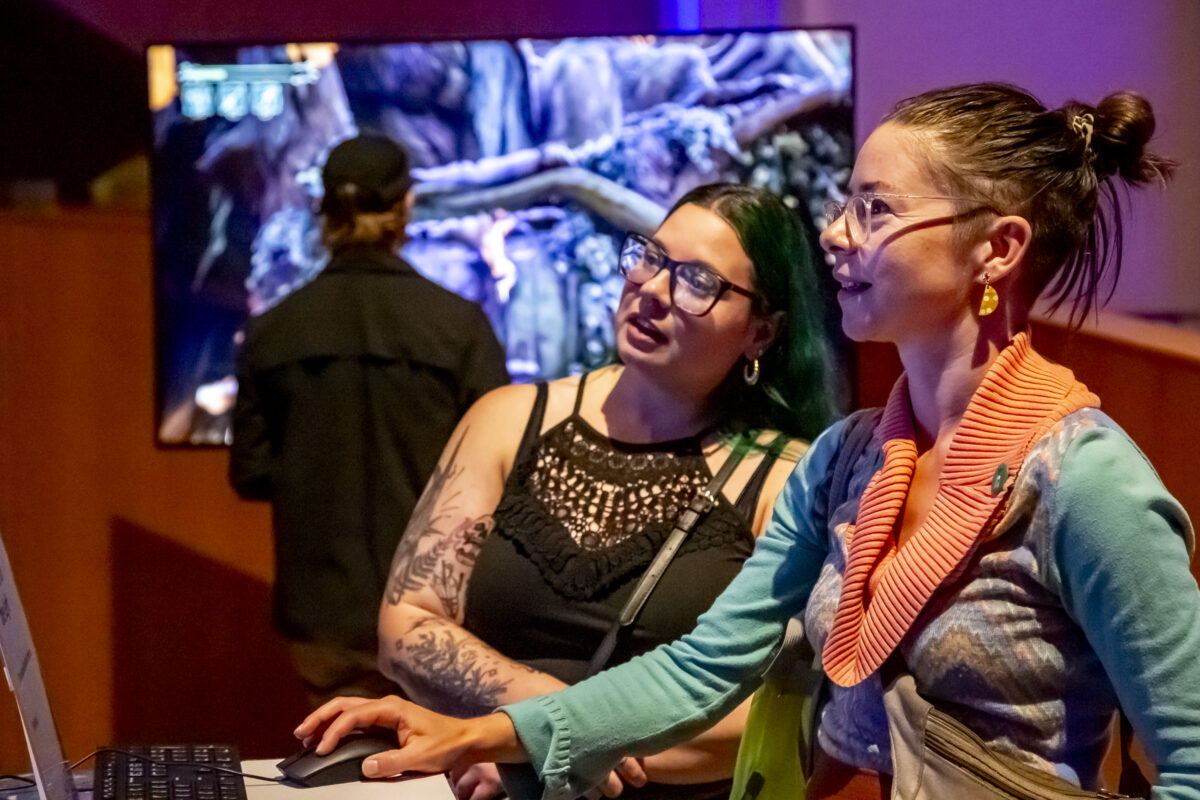
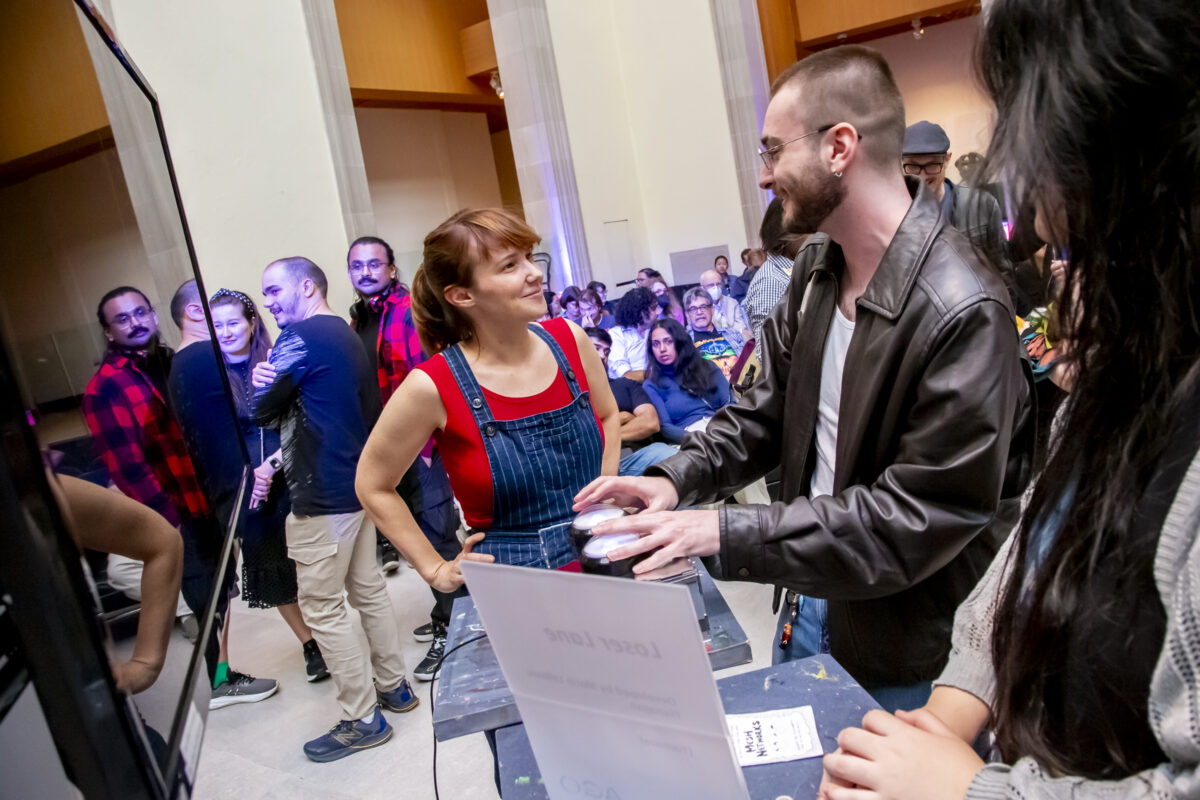
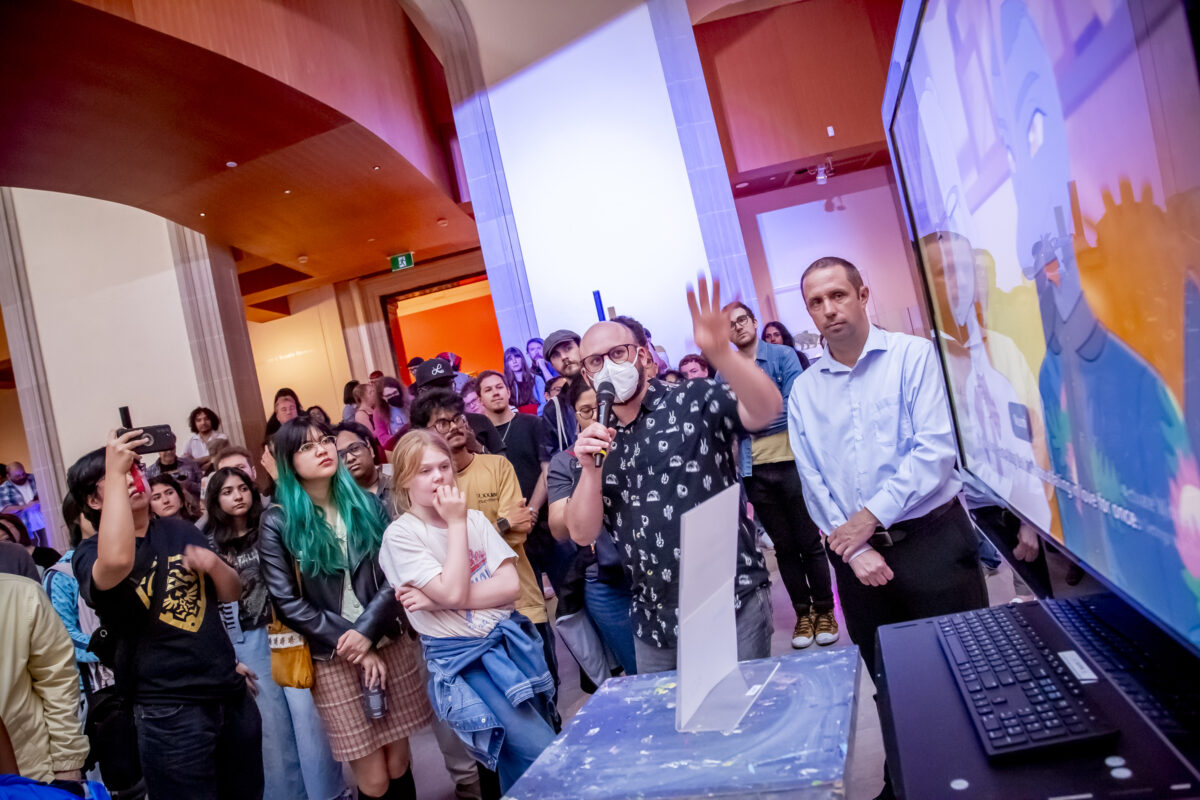
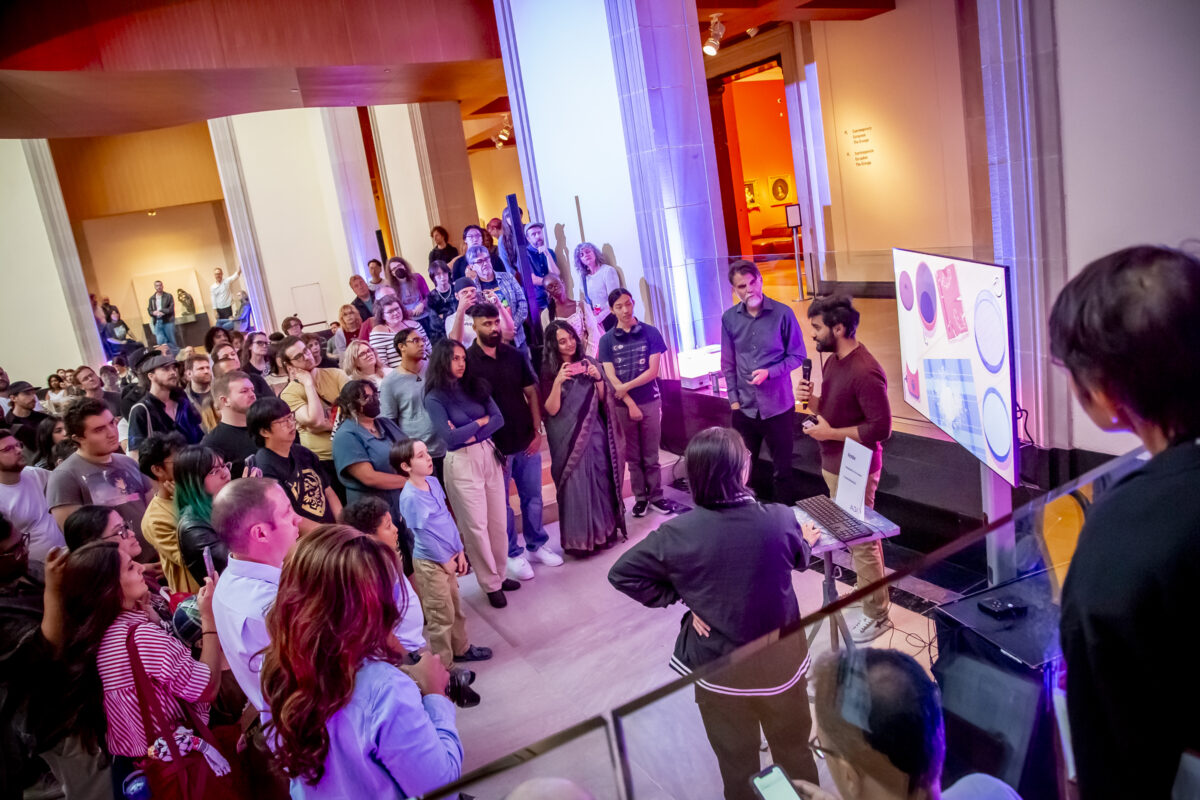
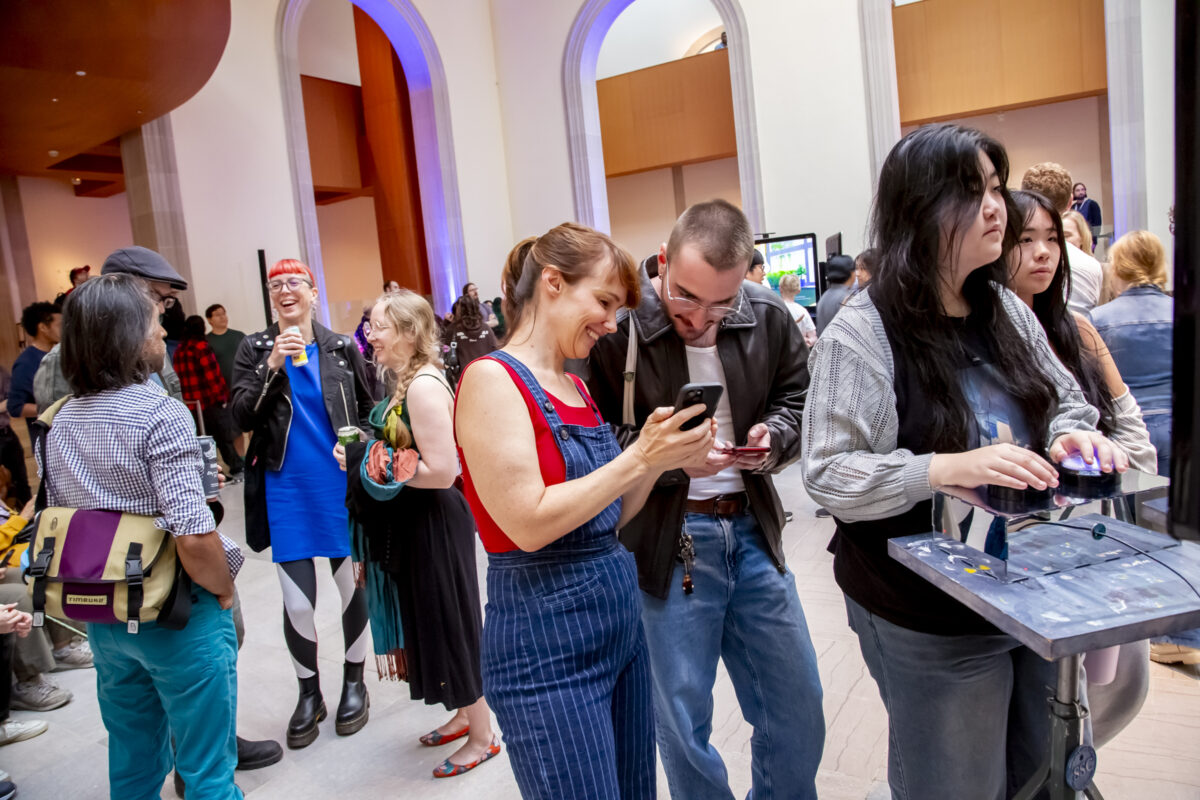
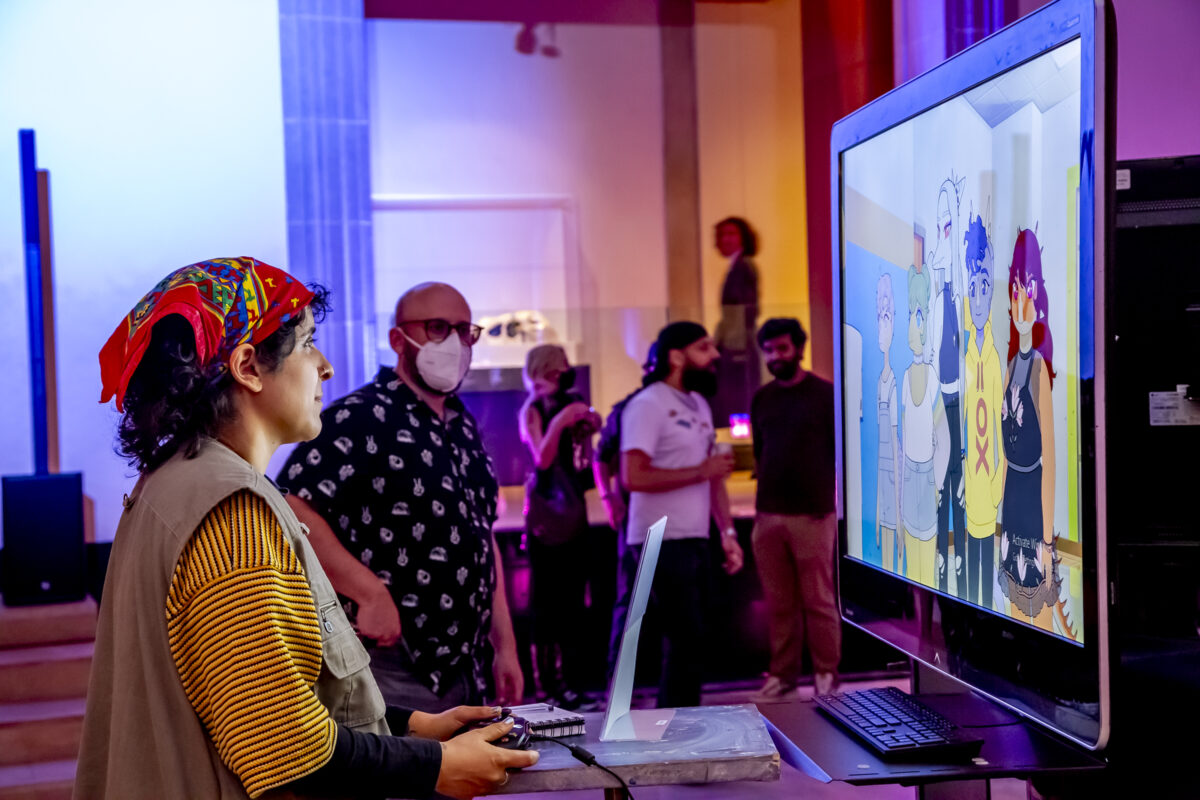
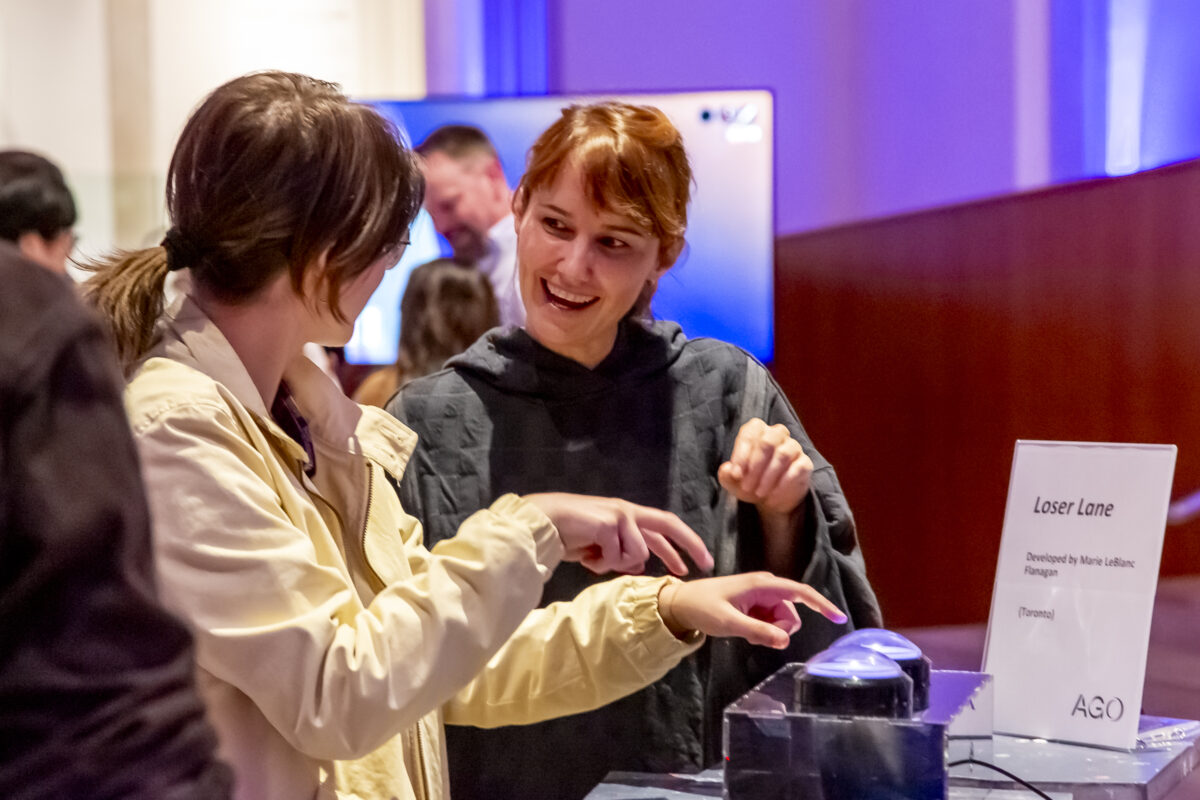
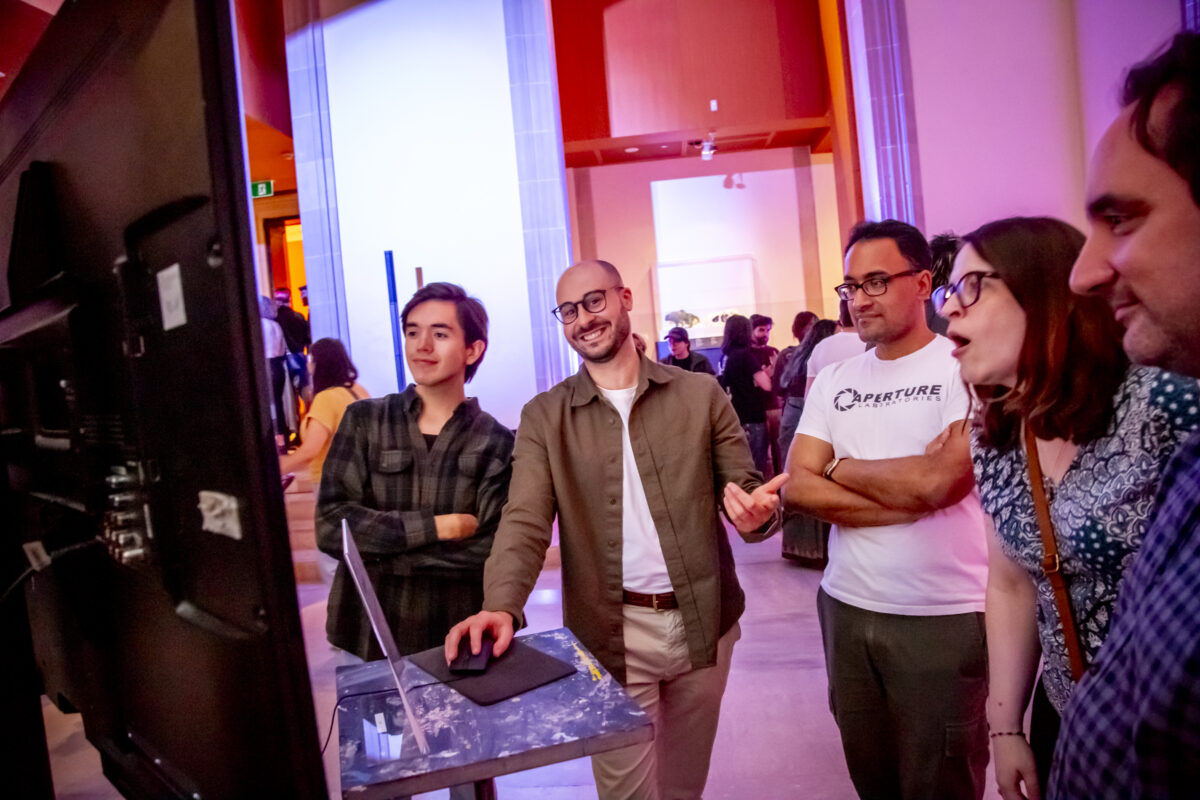
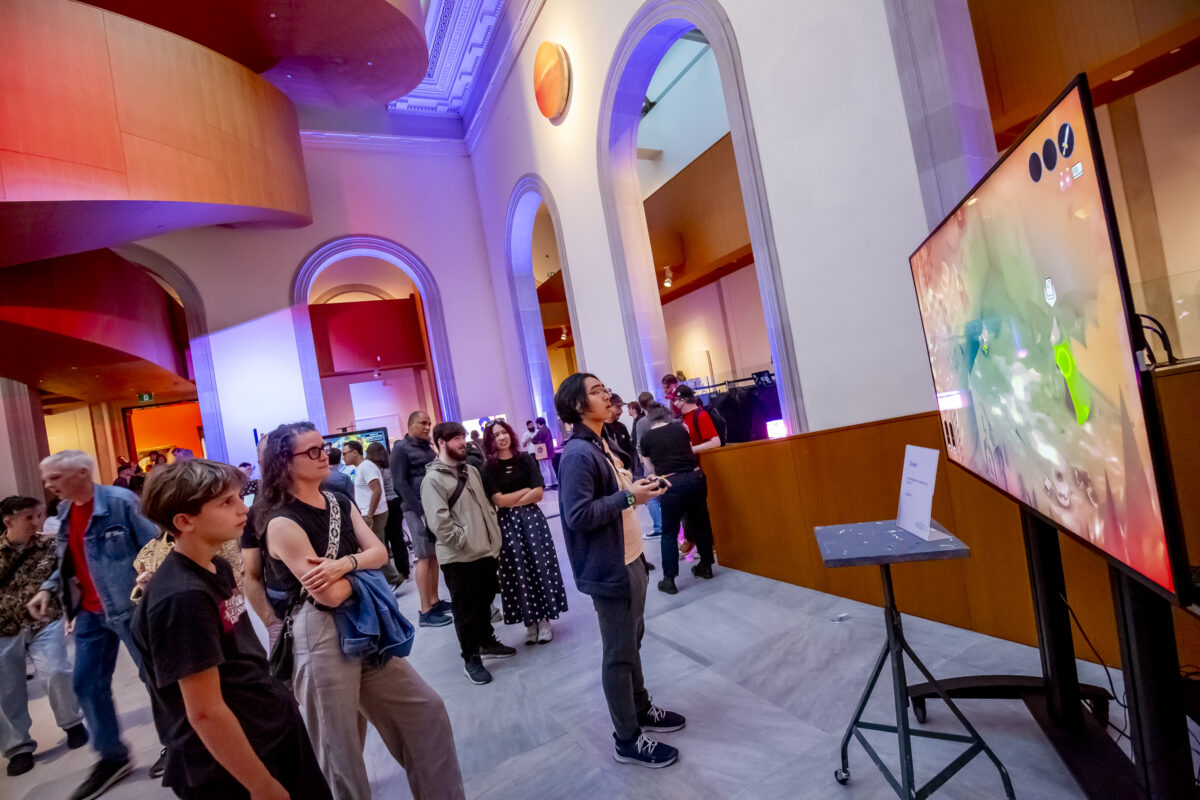
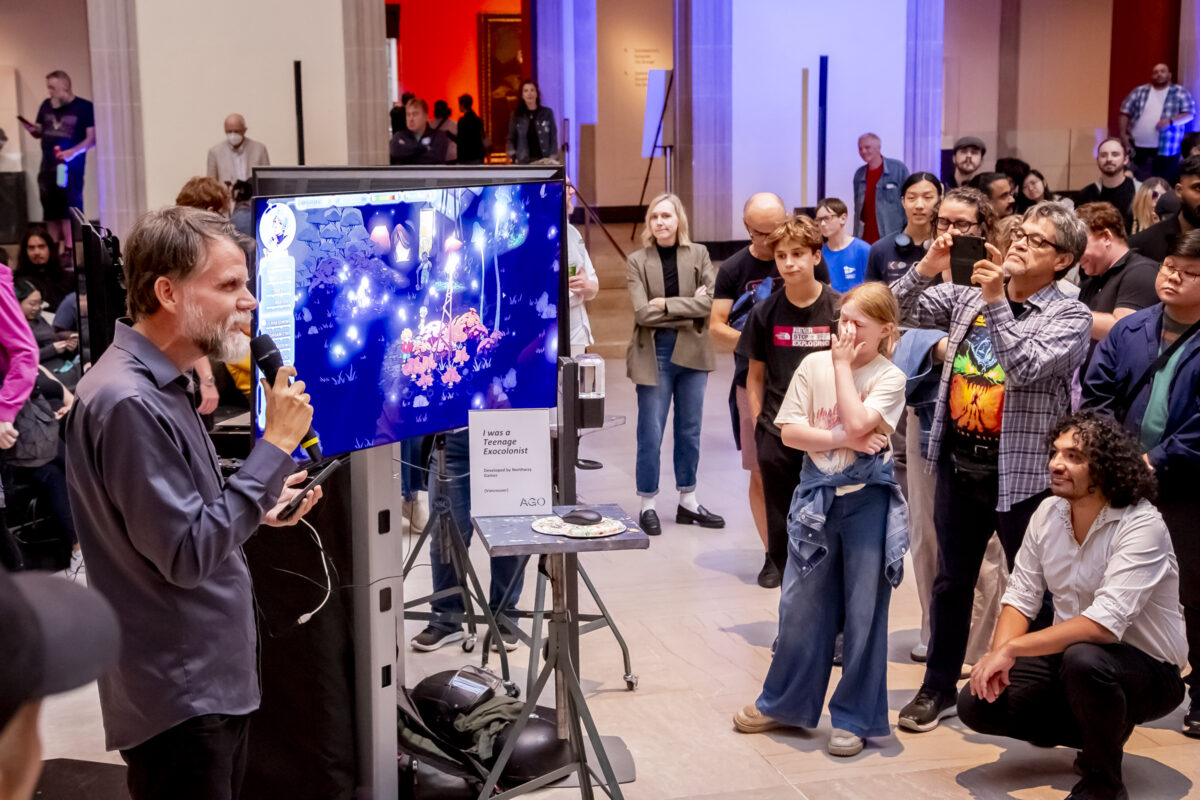
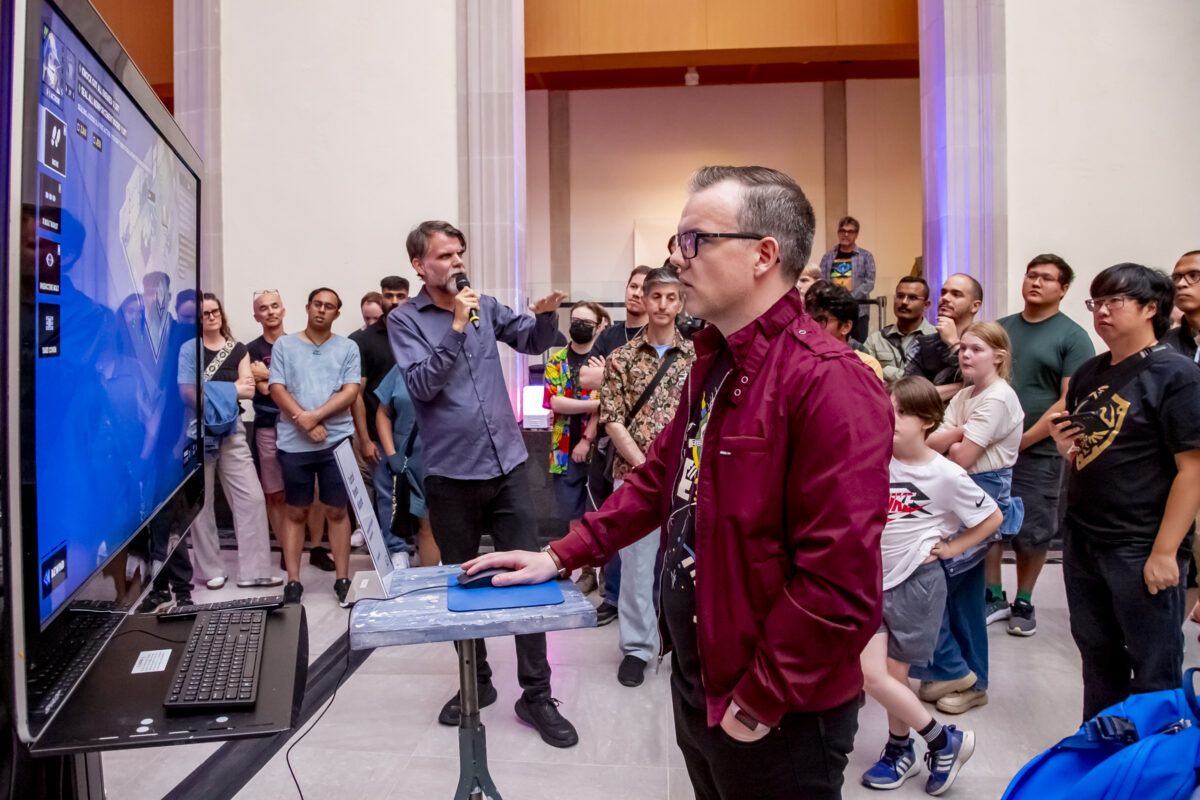
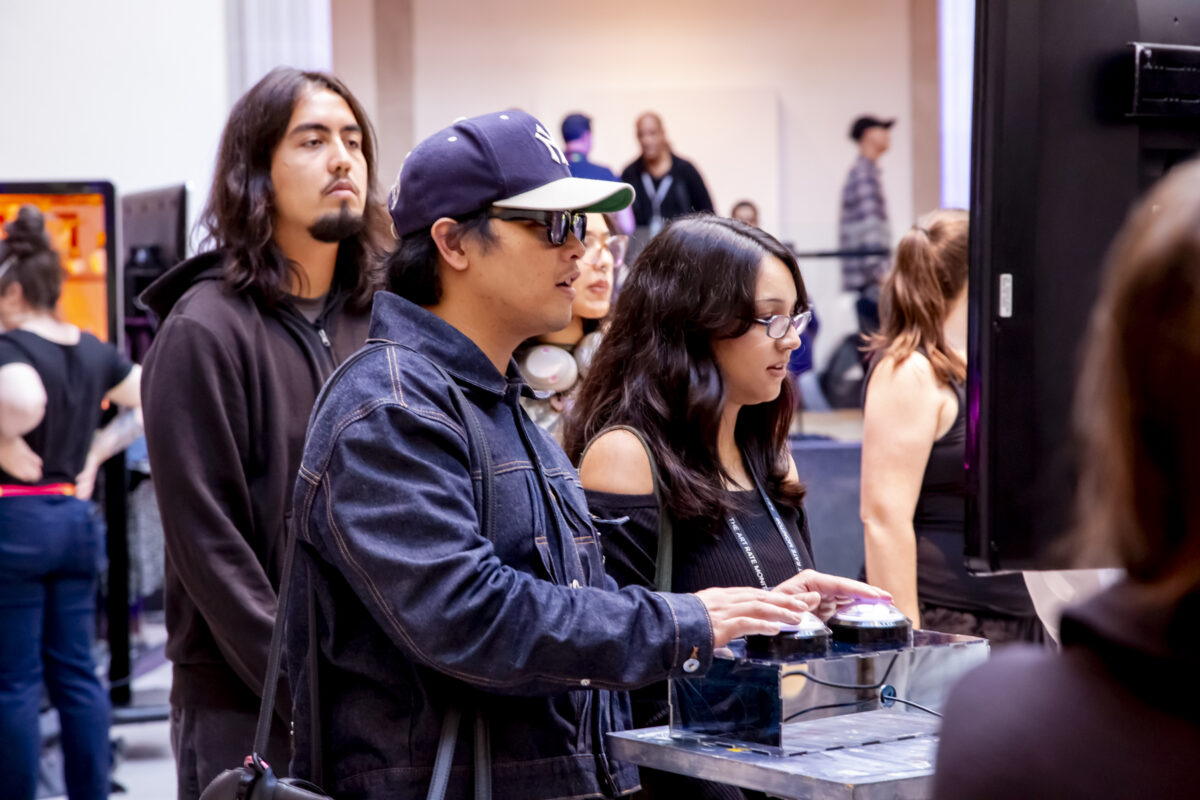
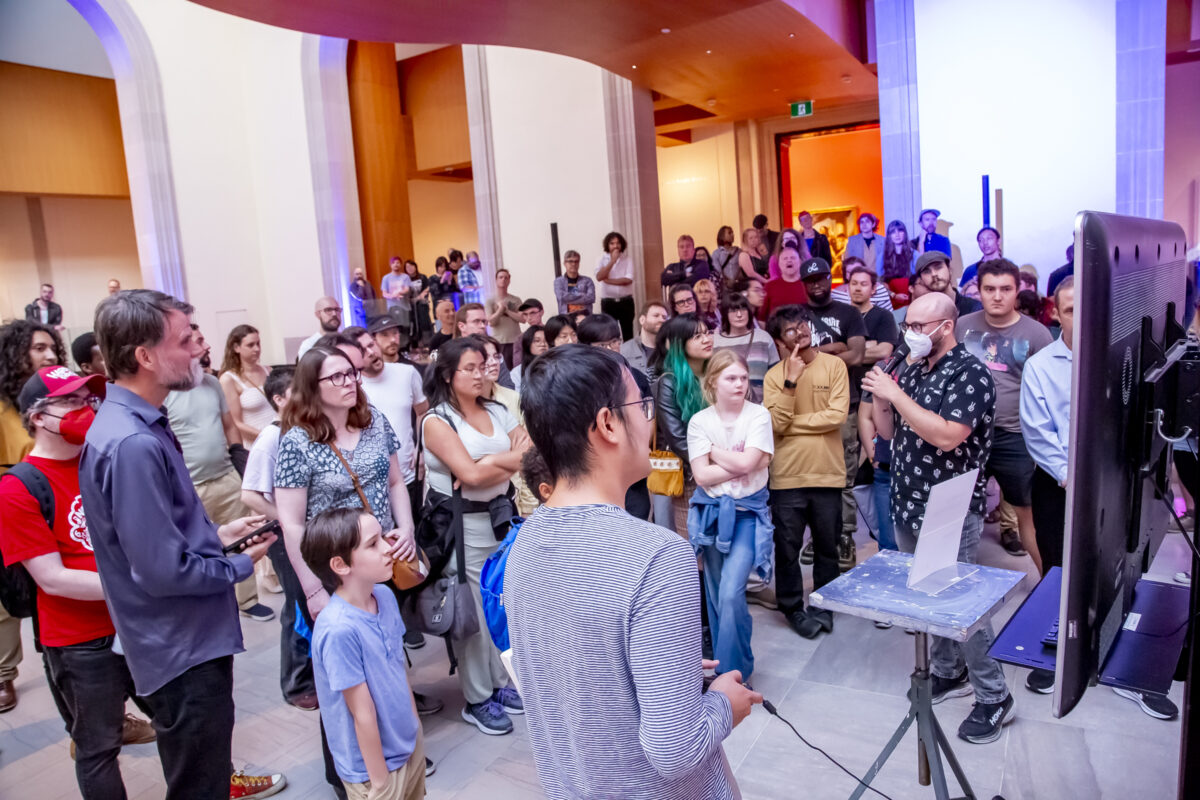
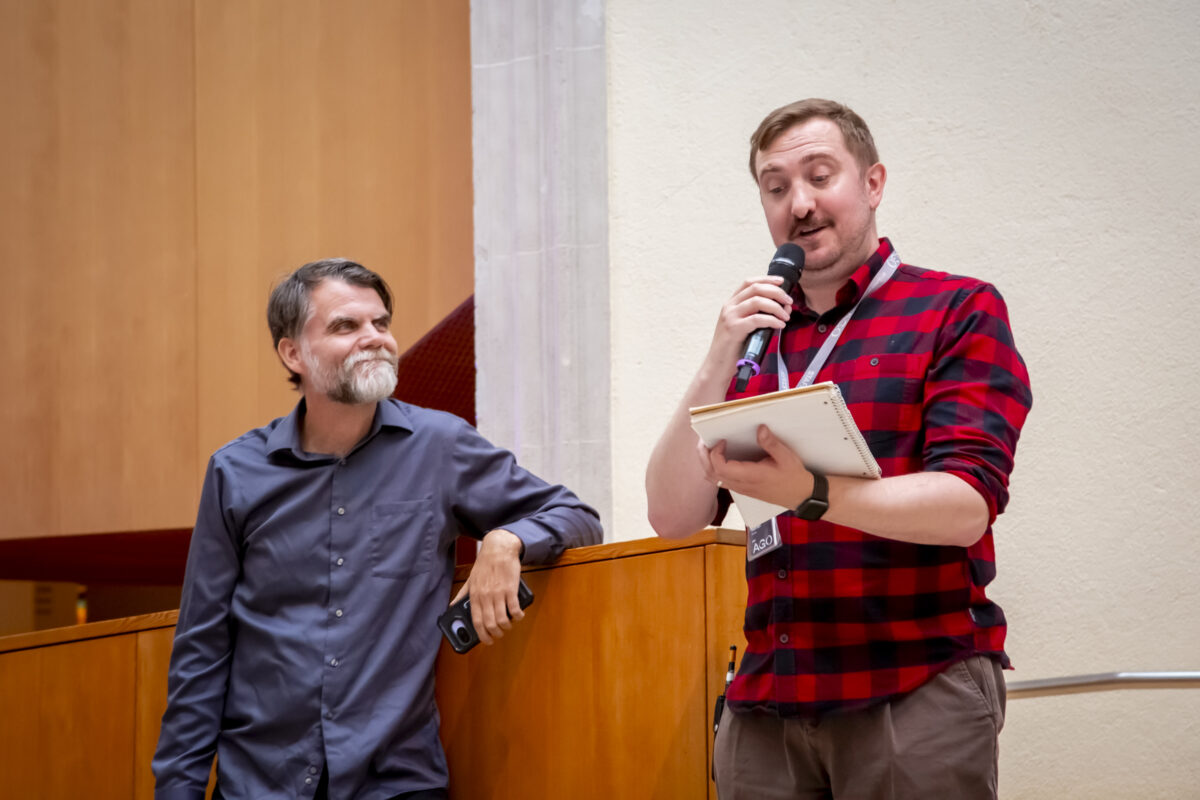
After the excellent time we had last year, the AGO had me back for a second Videogame Appreciation Night in September 2025. I’ve been remiss in posting Dean Tomlinson’s excellent photos and documentation, so below is my little kick-off speech, followed by the games I selected and why.
With all the tariff talk and people trying to buy north of the border, we started to think about a curatorial lens of Canadian games for tonight. Which, to be honest, was a challenge for me — I’m not a nationalist and I’m uncertain if that grouping always serves us well.
But I have always been a regionalist: I was born and bred in this city, I help run Toronto Games Week, and I’m a big Toronto booster — but I think everyone benefits when the people who live in a place celebrate and nurture the arts and culture from that place. It’s not because I think Toronto is the best, I don’t think people in Whitehorse or Pittsburgh should move here to make it as an artist — I think they should be boosters for the Whitehorse and Pittsburgh art scenes.
I’m not going to talk about how these games are quintessentially Canadian, but in the process of selecting them I did see a few similarities which I think are worth unpacking. One is more visible — many of the game reflect Canada’s multiculturalism, with diverse characters and teams, which is fantastic and much needed. The other less visible similarity is that a lot of these games benefited from public funding of some sort. This is a little more complex.
I work in the games community in an international context and most game developers find public funding for games baffling and enviable. I try to explain it to them by explaining that we’ve made the decision to collectively care for the things that are important for us. Similar to how we take care of our medical needs with a public system, if we want home grown culture, why wouldn’t we try to help our artists lower the risk of dedicating their lives to artistic work?
Now I’m not saying our hybrid approach is perfect, at all: but it’s a different model to many other places, and it’s consequently expanding the possibility space. If the only model is rapacious capitalism, that becomes our default reality. So I support our approach in that it fights the idea that there’s a single way of funding games.
After people had a chance to play the games I walked around and explained why I selected the ones I did, and the creators of several of the games were present to answer a question I had about their process. Below are my notes.
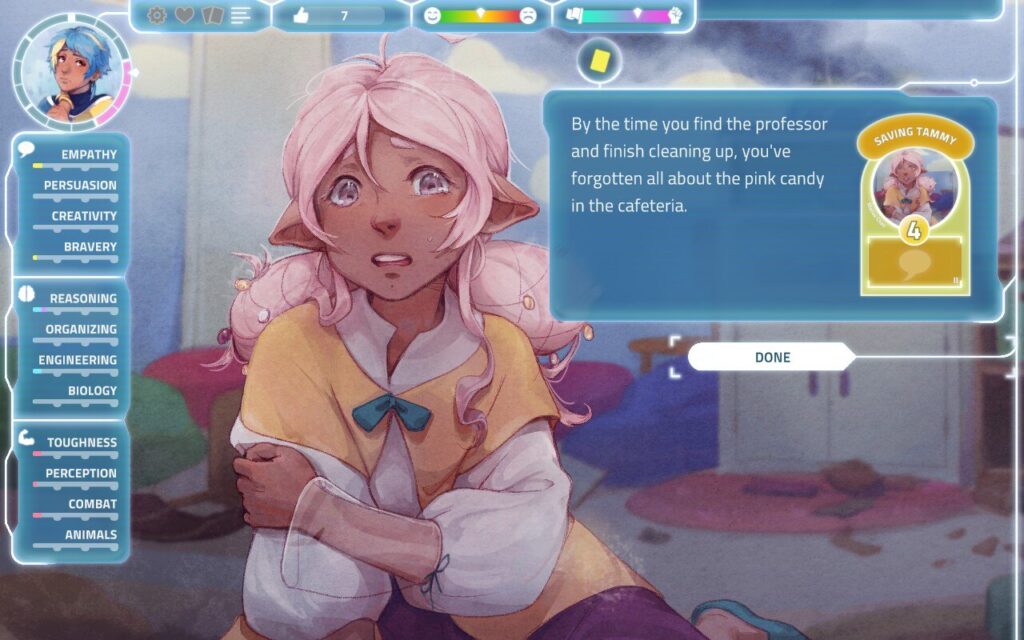
I Was a Teenaged Exocolonist (Vancouver)
A science fiction narrative that has you growing through your teens on another planet.
The character building is as strong as the worldbuilding, and it’s got great music and art to boot.
The interactive narrative doesn’t just rely on branching choices to progress — there’s rather unique card playing mechanic.
For instance, you start the game with a traumatic incident and whether you respond with a stress cry or a tough-it-out attitude gives you different cards that effect how the game progresses.
So the mechanic is emotionally grounded rather than related to attacks or defense.
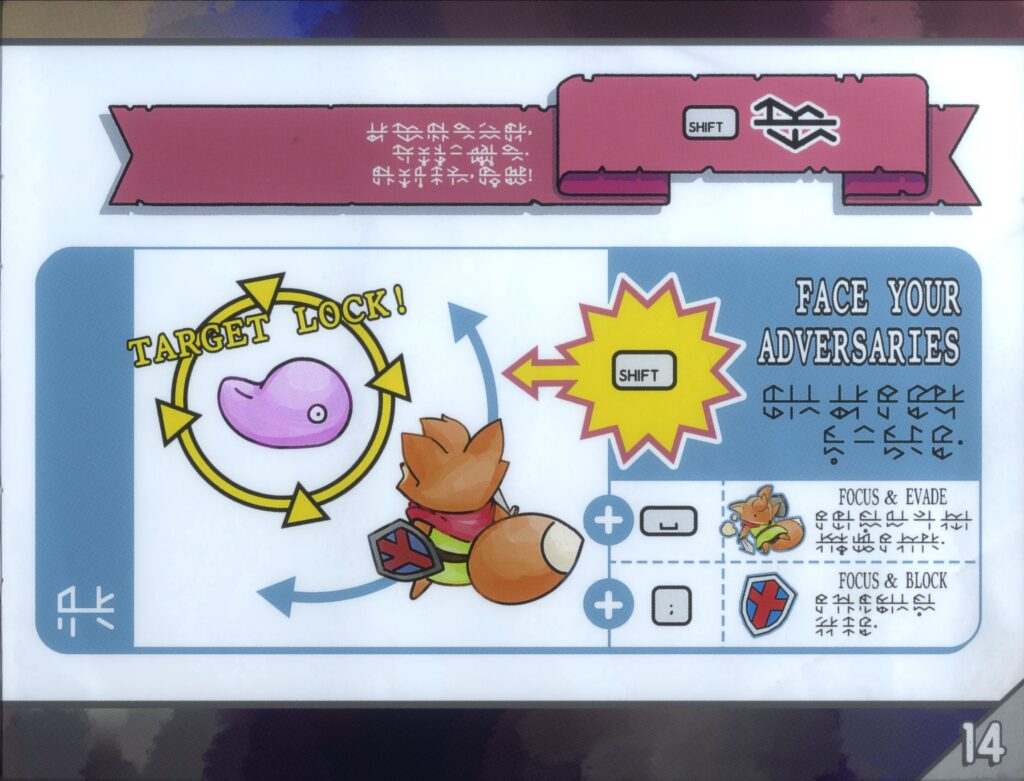
One of the ways we measure the maturation of a medium like cinema is noting when a work becomes metatextual: when the work comments on its own conventions.
In Tunic you’re given no instructions or tutorial to begin, required to explore until you find even the most basic of weapons to defend yourself.
But you also find pages of a manual in the game world, mostly written in an alien language.
This language also appears through the game itself, requiring you to select one unknown option or another and seeing what happens, perhaps a nod to North American’s childhood experiences exploring untranslated Japanese games.
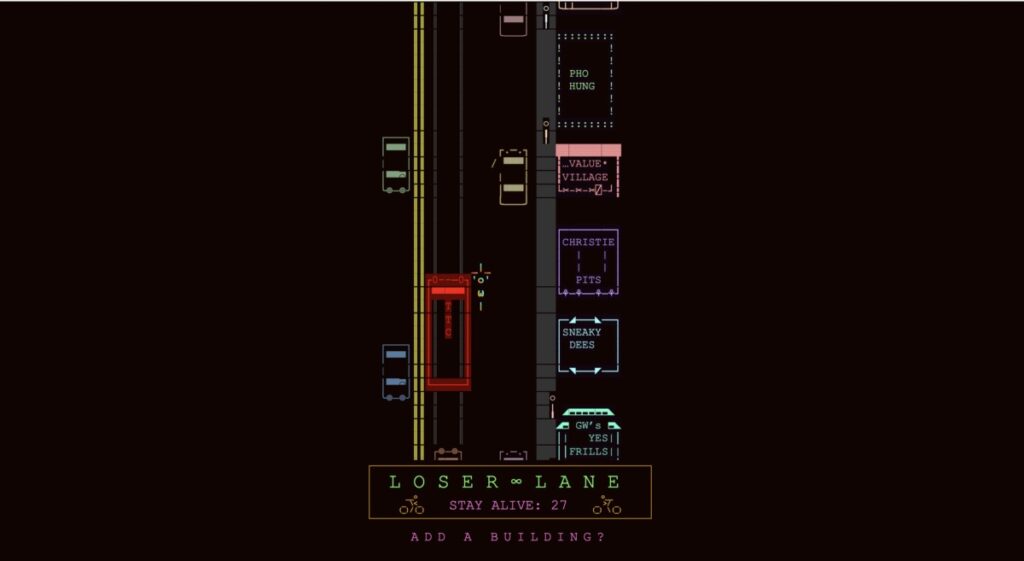
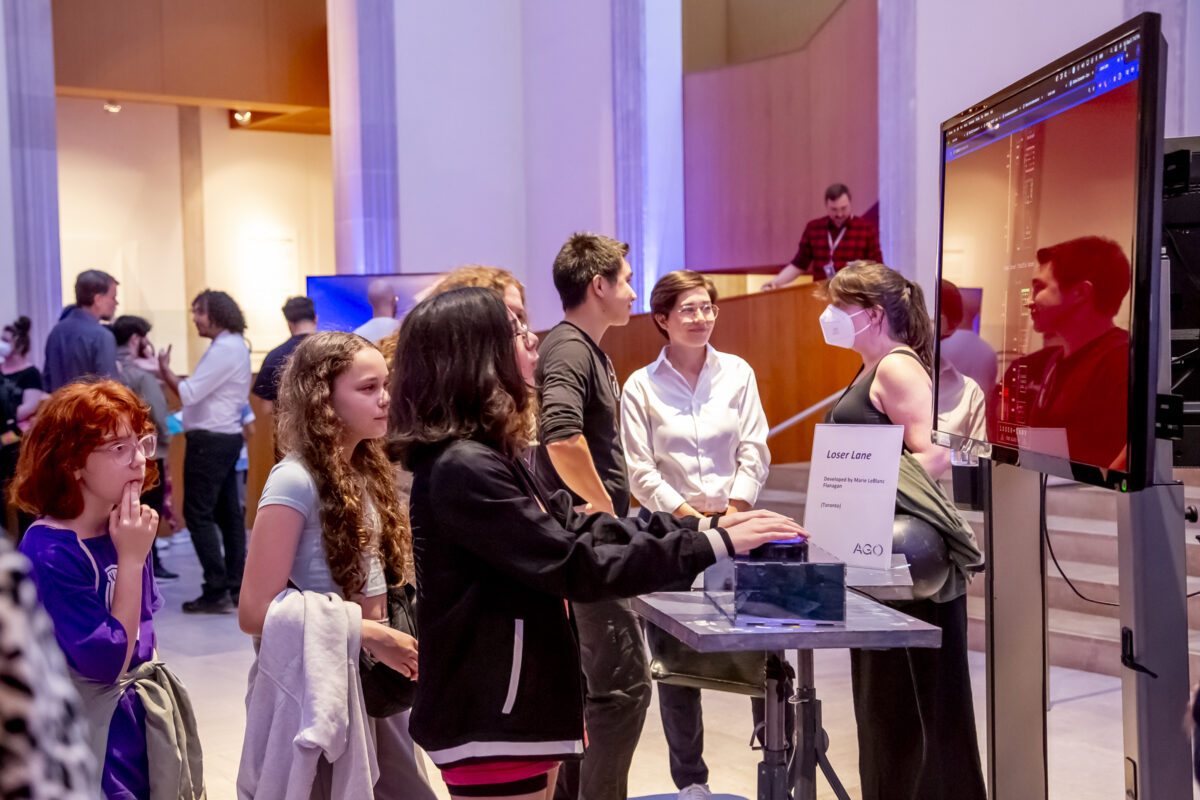
Loser Lane (Toronto/Montreal) – Artist present
A protest game made to demonstrate the dangers of removing bike lanes from Toronto streets.
It’s always just a matter of seconds til you die.
At some points when a parked car opens its door you feel the panic of realizing that the only way to escape it is under the wheels of a passing truck.
So while at times this is a funny game, it is not a fun game — It is frustrating and disheartening.

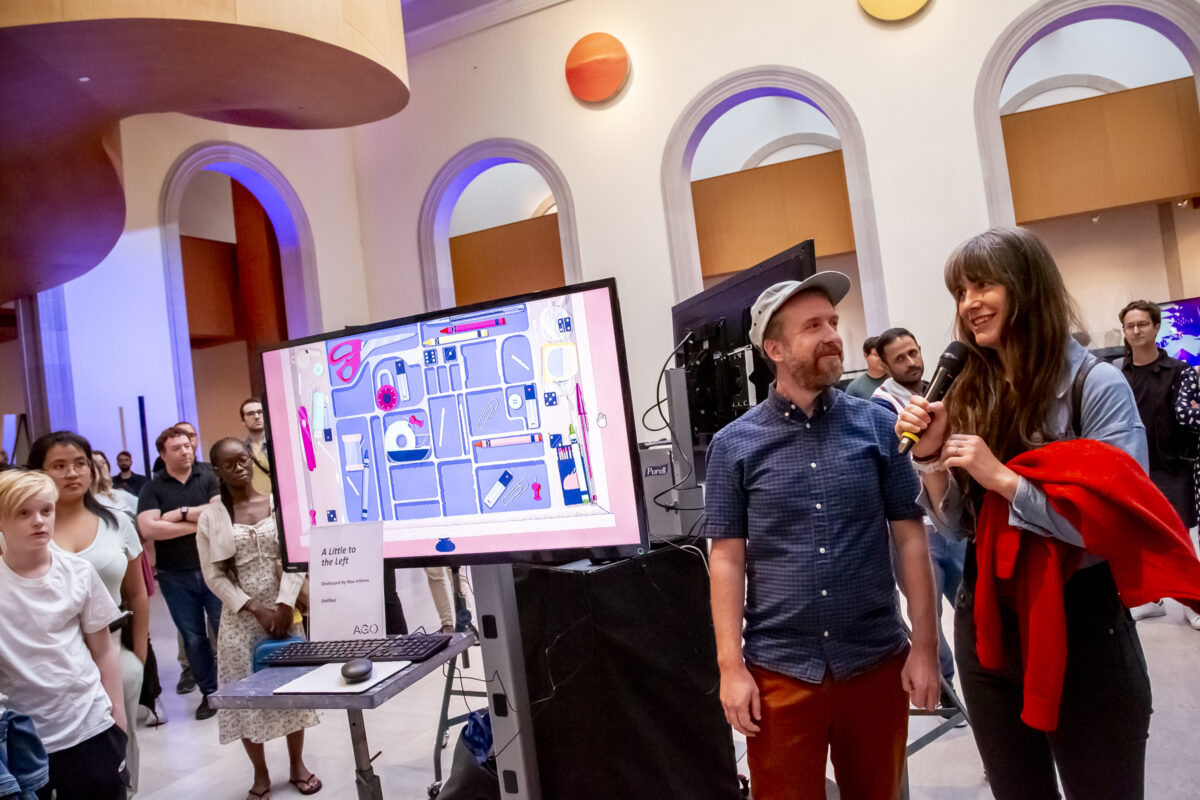
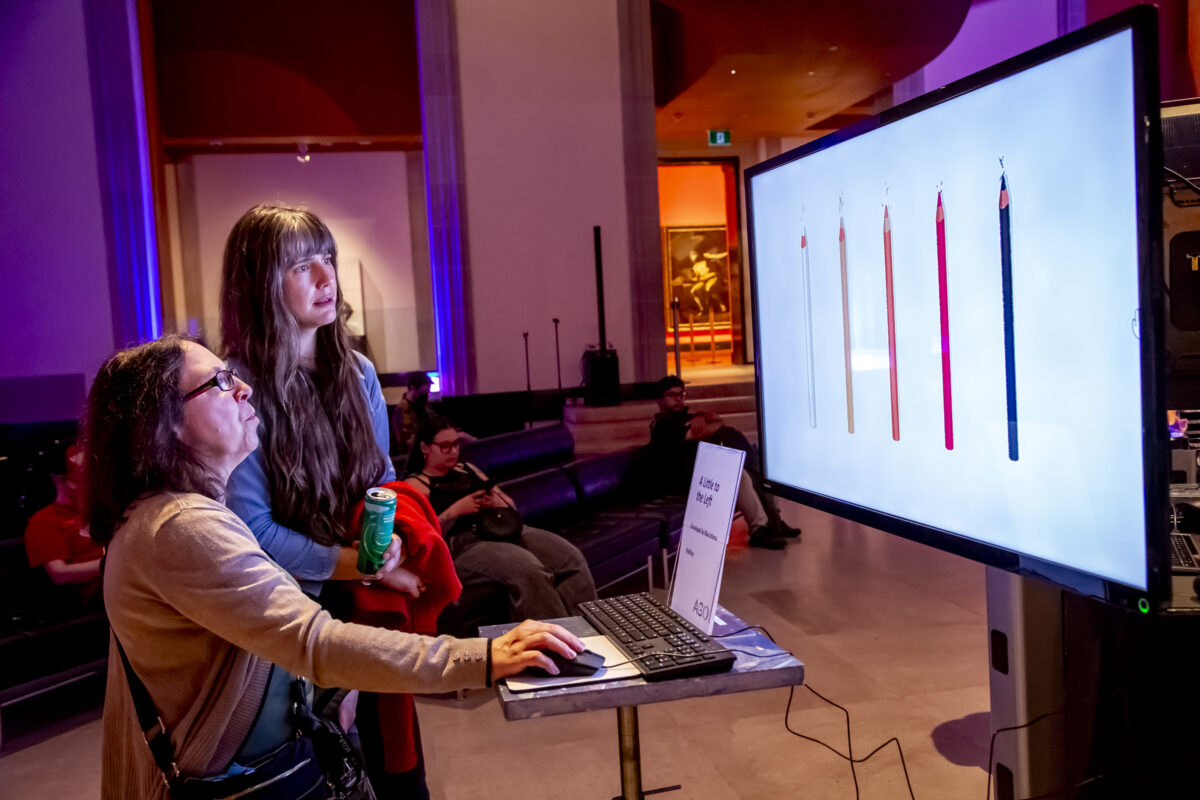
A Little to the Left (Halifax) – Artist present
Ok, so who of us here, if you go into a room with a painting on the wall that is slightly askew, will take great satisfaction in tweaking it just a little to the left? This is the game for you.
This is an example of a growing genre of cozy games: one that focuses on small gentle interactions rather than big explosive ones.
You simply adjust a series of objects on a surface. Maybe you’re arranging pencils from largest to smallest, or plates in a graduating colour sequence.
It’s incredibly satisfying in a way in a way that only work in a game.
Just as you think you have it figured out and you’re blazing through all the puzzly levels, a cat paw comes on the screen and wrecks all your good work.
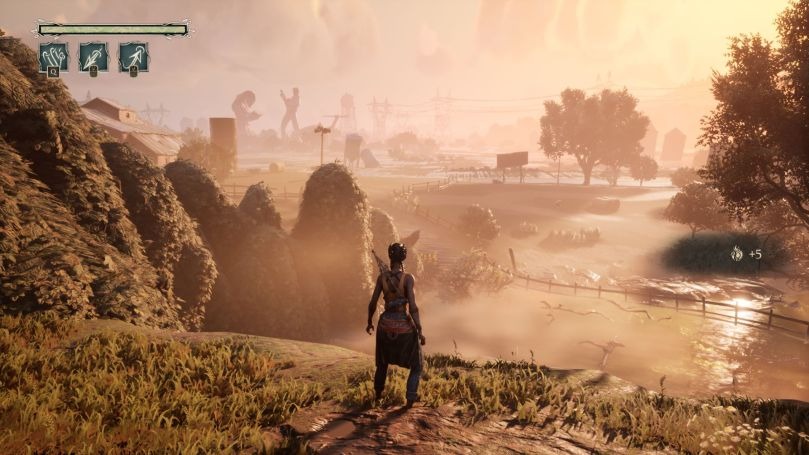
South of Midnight (Montreal) – Artist present
Despite being developed in Canada, South of Midnight is steeped in the mythos of the Deep American South, its unique stop motion animation style helping it stand out.
The story starts with your mom being washed down the river and you having to go get her encountering magical creatures along the way, both friends and foes.
I found the combat with the enemy Haints to be quite satisfying, as you have to develop your own strategies at how to deal with them.
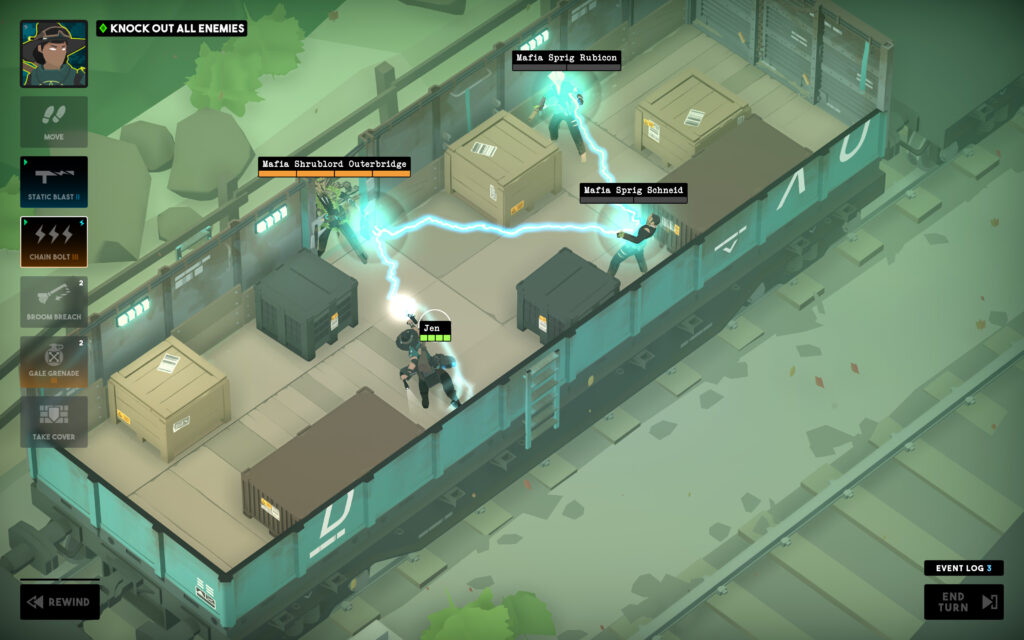
Tactical Breach Wizards (Vancouver)
So while this this at first glance looks like a game about murdering bad guys, it actually is a rather relaxing puzzle game as it’s turn based rather than relying on quick reflexes.
You control a number of wizard mercenaries with different skills and you have to clear each room before they take you out. You decide all your moves and put it in motion, so to speak, and see that scenario play out with a kinetic burst of action that’s very satisfying, almost like knocking dominoes over.
If it doesn’t work well, you can rewind (as one of your wizards can manipulate time) and try again.
The writing is also an exceptional combination of the modern and arcane, and some levels are anxiety dreams that allow you to unlock powers that are related to the character’s psychological states, like Persistent Delusion.
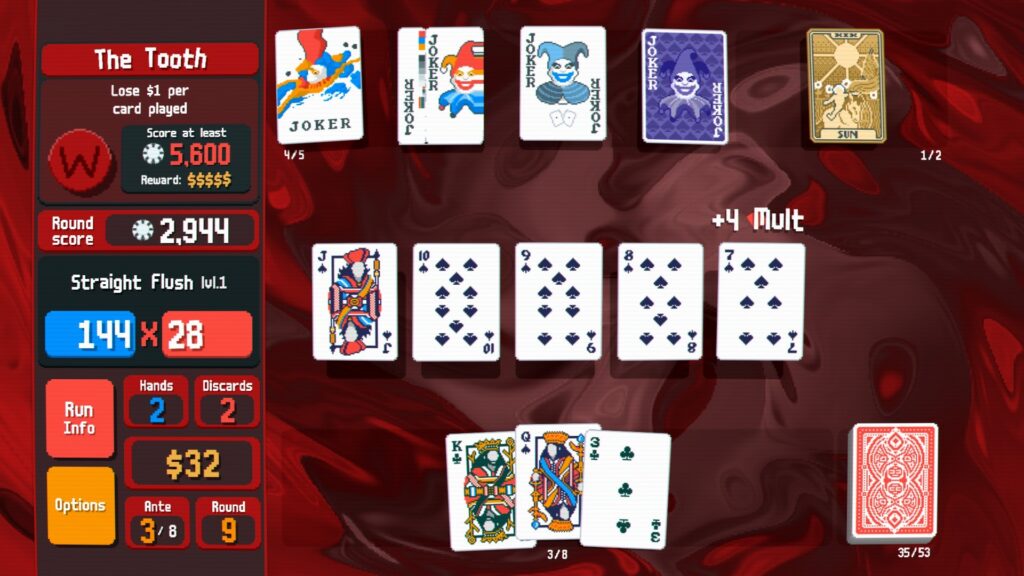
Balatro is basically a kind of poker solitaire which absolutely, positively should not be as engaging as it is
But this unassuming card game which has sold over five million copies and swept this year’s awards competitions internationally.
It’s a deep, well balanced game with a lot of clever touches — the Joker modifier cards and visual stylistic choices like the CRT monitor aesthetic — but I think one of the most compelling thing about this game is the fact that it was made by a solo auteur game creator from Saskatoon named LocalThunk, whose identity is shrouded in mystery.
He’s basically the J.D. Salinger of games right now.
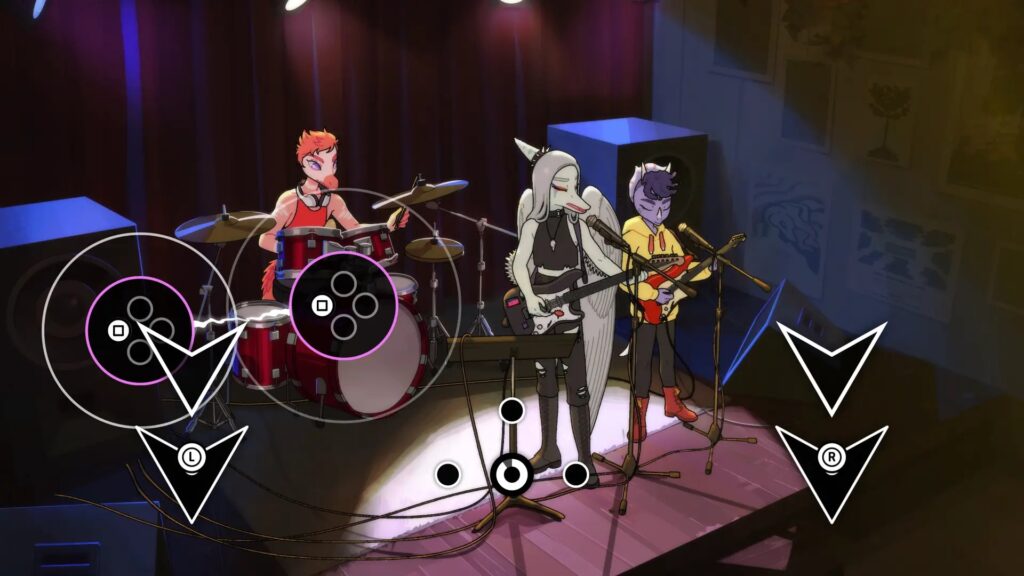
Goodbye Volcano High (Montreal) – Artist present
All the teenagers in this game have the normal anxieties about what their lives are going to be like after graduation, but they’re dinosaurs
And so it feels extra angsty for them because there’s all these news reports about how a meteor is going to hit earth — and we know how that worked out.
You play as Fang, a non-binary musician, and you play rhythm games and make dialogue choices that impact your most important friendships.
What really stood out for me was the character development — it’s touching to see how the rebellious Fang and their more conventional brother support each other.

Venba (Toronto/Montreal) – Artist present
A narrative cooking game where you play as an Indian mom who immigrates to Toronto with her family in the 1980s.
You cook Idlis and biryani, having to start again if you get the order of ingredients wrong. You have a cookbook to refer to, but it has some parts smudged out and sometimes is in another language. But the gameplay and story are really complementary, and we follow a young couple deciding to stay in Toronto to raise their newborn son over a twenty year period.
What struck me in particular about this game was the little dramatic scenes in between the levels. They have impeccable pacing and emotional impact that make it the envy of games with 100X the budget.
Leif Conti-Groome captured a short clip of Venba creator Abhijeeth Swaminathan answering one of my questions here:
Thanks to the following for making this night of video game art appreciation possible: The City of Toronto, Get Set Games, Toronto Games Week, photographer Dean Tomlinson, and my esteemed collaborator Nathan Huisman at the AGO.